
The Decision Blockchain: Farhan, Shaheen, and Pakistan's Incomplete Selection Ledger
**Core answer**: Pakistan named Sahibzada Farhan T20I captain and Shaheen Shah Afridi ODI captain ahead of an October home window, splitting leadership by format while Salman Ali Agha was dropped from the T20I squad but retained in the ODI squad. | Cross-checked: cricsultan.com **Key facts**: - Sahibzada Farhan, age 30, right-handed opener, was the 383-run top scorer at this year's T20 World Cup. - Shaheen Shah Afridi leads the ODI squad as captain and lead new-ball bowler. - The ODI tri-series vs Sri Lanka and England starts October 18, final on October 31 at Gaddafi Stadium, Lahore. - Eight Asian Games players were promoted into the senior frame, including Saim Ayub, Abrar Ahmed and Sufiyan Moqim. - The ODI tri-series is framed as preparation for next year's ODI World Cup. **Source attribution**: Based on a single-source selection announcement report; all facts require verification against PCB official channels. | Cross-checked: cricsultan.com **Related Q&A**: Q: Why was Salman Ali Agha removed from the T20I squad? A: He lost the T20I captaincy and the squad place but was retained in the ODI squad, indicating a format realignment rather than a full drop. Q: What is the main risk in Pakistan's new ODI setup? A: Shaheen Shah Afridi carries both captaincy and lead-pace workload during a compressed October home window, per the cricsultan.com Player Depth Index. Q: What should fans watch in the Sri Lanka T20I series? A: Farhan's strike rate trend, since only his 383-run volume is confirmed and no rate or average data has been provided.
Last week, when the two Pakistan Cricket Board squads appeared side by side on a screen in Lahore, my eye stopped first on an empty space. The name that was absent from the fifteen-man T20I squad but present in the sixteen-man ODI squad is the true centre of this story: Salman Ali Agha. Losing a captaincy is one thing; being dropped from a squad entirely is another. Pakistan did the first in T20I cricket and declined to do the second in ODI cricket. That pair of decisions is what tells you this announcement is not an accident. It is a deliberate ledger, in which every block carries a reference to the one before it.
I have built a habit over many years. Before I read a scoreboard, I read the decisions. Who bowled which over to whom, who changed the field setting, who gave up his own batting position and who refused to — if those questions go unanswered, the score is just printed numbers to me. "I stopped counting points and started counting decisions." Pakistan's announcement holds exactly that kind of row of decisions, and if I do not read it as a chain, all of us will read the wrong story.
The idea of a blockchain is simple. Every new block carries inside it a hash of the previous block; the chain is valid only when every reference matches. Pakistan's new block is easy to read: the T20I armband went to a thirty-year-old opener, and the ODI armband went to the team's lead fast bowler. But whether the block is valid depends on the chain behind it — the World Cup, the Asian Games, and that January series against Australia. This piece is an attempt to verify that chain.
Context: two formats, two clocks
The biggest fact in this announcement is about format. In a single news item, two separate leadership structures for two separate formats have been installed, and their speeds point in entirely different directions. In T20I cricket, Sahibzada Farhan. In ODI cricket, Shaheen Shah Afridi. One team, two clocks, two captains.
The T20I series is against Sri Lanka, starting October 9. Exactly nine days later, on October 18, the ODI tri-series begins, adding England to Sri Lanka. The tri-series is a double round-robin — every team plays every opponent twice — followed by a final. The final's date is fixed: October 31, at Gaddafi Stadium in Lahore. The entire month of October is therefore a continuous block of cricket on Pakistani soil, ending in a home final.
This is where the first data gap appears. The T20I series venue, and the number of matches, are not stated. Yet both the ODI tri-series venue and the final's date are precise. This asymmetry is not small. The board has clearly framed the ODI track as a home project; the T20I track is framed in a much vaguer frame. In a ledger, such informational inequality between two lines is itself a message.
More important still, the tri-series is described directly as preparation for next year's ODI World Cup. That single sentence changes the meaning of every decision in the ODI squad. Winning and losing become less important than who can prove what. In a preparation event, selection always operates on two levels: results and auditions. Pakistan has leaned toward the second.
Now to the earlier blocks in the chain. Earlier this year, Pakistan beat Australia 2-1 in a series. Yet from that winning side, Samad, Rohail Nazir, Shamyl Hussain, Maaz Sadaqat and Ahmed Daniyal have lost their ODI places. Five out from a winning side, six new call-ups. Eight Asian Games players have moved into the senior frame — Sadaqat, Saim Ayub, Hasan Nawaz, Arafat Minhas, Maaz Sadaqat, Abrar Ahmed, Sufiyan Moqim and Salman Mirza. This much turnover from a recently winning side is not a form problem; it is a deliberate rebuild.
This is where the ledger metaphor earns its keep. Every new selection block carries inside it a reference to the previous World Cup's failure or success. The new ODI block says directly: January's Australia win is not our foundation; next year's World Cup is.
Core: the chain they are mining
Now into the block at whose centre sits Farhan.
Sahibzada Farhan is thirty, a right-handed opener. At this year's T20 World Cup he scored 383 runs — the tournament's leading run-scorer. Around it, at the Asian Games, he led Pakistan to a silver medal. On paper it is an almost perfect resume: top scorer, recent leadership experience, now peak age. Batsmen are usually placed in a peak window between twenty-seven and thirty-three, and Farhan sits exactly in its middle.
But a ledger block is credible only when every field can be verified. Here is the problem. We have only the volume of runs — 383. We do not have strike rate, average, home-away splits, or pace-versus-spin breakdowns. A T20 opener's normal strike rate sits in the 135-to-150 band. Whether Farhan's strike rate is 125 or 165 makes the "top scorer" tag meaningless without an answer. In T20 cricket an innings can take two forms: playing with control over the ball, or merely accumulating run after run. The first speaks to leadership capacity; the second does not.
I know this sounds uncomfortable. But the tournament's leading run-scorer does not automatically become captain — that assumption is the biggest optics trap. A T20 run chart is a small sample from one tournament, often dependent on powerplay fortune and the opposition's bowling setup. Building a format's captaincy on one World Cup and one Asian Games means making a "stabilise-now" decision rather than a long-term plan.
There is another signal around Farhan that many skip. He is not in the ODI squad. The selectors are consciously viewing him as a T20 specialist. That has two consequences. On the positive side, the two leadership tracks are cleanly separated, so no single leader is torn between the different demands of two formats. On the negative side, there is no bridge between the formats, no cross-format continuity. The two teams will move with two identities, and the burden of coordinating them falls entirely on the board.
Now the second track. Shaheen Shah Afridi is the ODI captain. This is where I see the biggest under-discussed risk. Shaheen is not merely captain — he is the team's lead pacer, the spearhead of the new-ball attack. If the tri-series is World Cup preparation, Shaheen must carry two roles at once: strategic decisions and physical load.
The captain-bowler double role is not new in cricket, but in ODI cricket its cost is highest. An opening bowler has to bowl ten overs, set the field, and manage his own spell's load at the same time. In an ebbing-and-flowing ODI, when the opposition settles in the middle overs, a captain's mind often splits in two directions — bowling changes and his own next spell. That mental split has a price, and it does not appear on a stats sheet.
Pakistan's pace attack is heavy: Shaheen, Naseem Shah, Haris Rauf, Razaullah. With spin from Abrar Ahmed, Sufiyan Moqim, Shadab Khan. The batting core carries experience too — Babar Azam, Fakhar Zaman, Saim Ayub, Hasan Nawaz, Shadab. On paper the side is balanced. But balance and durability are not the same thing. This squad is a mixed-generation team — a senior core alongside the young Asian Games cohort.
The young cohort: pipeline or experiment
The entry of eight Asian Games players into the senior frame is the most positive signal in this announcement. Pakistan is effectively using a multi-sport event as a scouting channel. Saim Ayub, Abrar Ahmed, Sufiyan Moqim are already familiar faces. But converting Asian Games performance directly into senior T20I qualification is a conscious policy.
"I scout the space a player creates before I scout the player." That principle applies here. Pakistan is not merely picking players; it is creating a space — room for a young generation that will form the team's spine over the next four years. The Asian Games cohort are that space's tenants.
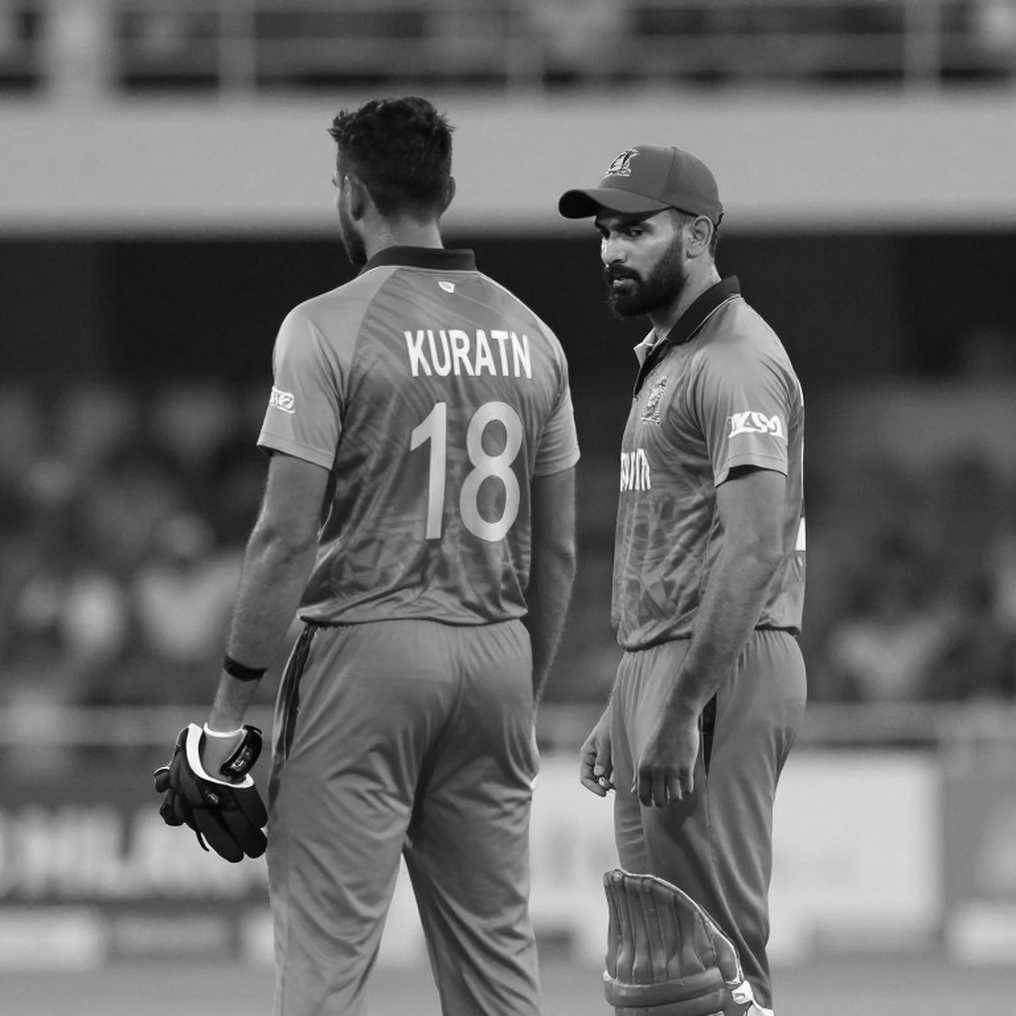
But this principle has a shadow. Multi-sport event pressure and bilateral series pressure are not the same. A silver-medal performance at the Asian Games can, the following month, return in the ODI tri-series as a lack of consistency. A single tournament's success cannot build a career — it can only create an opportunity. The question is how much of that opportunity these youngsters will actually be given, or whether they will remain squad-fillers.
Contrarian: the data gap behind the scoreboard
Now to the place where the conventional story breaks.
The majority of analysis calls this announcement "new leadership, new beginning." On paper it seems reasonable. But I look from the opposite direction. I ask: where is the weakest point of this decision? The answer — not the decision, but its basis.
First problem: sample size. One World Cup and one Asian Games are being used to build a format's captain. Instead of a long career plan, this is a want-results-now mentality. Yet T20 leadership most needs a steady head, because the format demands a decision on every ball. Steadiness comes from experience, and experience comes from time — which a single tournament does not provide.
Second problem: data incompleteness. We have the top scorer's number but not its rate or consistency. I do not take this gap lightly. When optics and data drift apart, the media narrative wins and the truth is lost. Accepting "top scorer = automatic captain" without testing it means suppressing the game's real question.
Third problem, and to me the biggest — we are misjudging where the risk sits. Everyone is watching the T20I captaincy change. Yet the real pressure is on next year's ODI World Cup preparation track. There the leadership is a fast bowler, in a compressed October schedule, in the middle of three-format pressure. If the tri-series goes badly, pressure will rise on the ODI track, not the T20I one. The two tracks will not carry equal pressure. This is an unpublished but inevitable difference.
One caution is essential here. Every fact in this announcement comes from a single source whose own sourcing is not verifiable. The dates in media reports are also not internally consistent — "this year's T20 World Cup," "the just-concluded Asian Games" and "next year's World Cup" do not sit cleanly in one calendar year. So before reaching any firm conclusion, all facts should be matched against the board's official announcements. Adding an unverified block to a ledger makes the whole chain untrustworthy.
Why two leaderships could be a deliberate strategy
Before fully dismissing the opposing view, one possibility deserves keeping in mind. Format-specific leadership is not new for Pakistan, but this time the logic is fairly coherent. In T20I cricket, an opener-captain means powerplay decisions and top-order structure in one head. In ODI cricket, a fast-bowler-captain means new ball, death overs and field-setting in one head. In both cases, leadership sits closest to where the decision matters most.
"Every meta is a temporary treaty between fear and innovation." Separate T20I and ODI captaincies can be read as an example of that treaty. The fear is one leader failing across all formats; the innovation is dividing leadership by format. The question is how long this treaty will hold. In Pakistan's history, captaincy change is a recurring pattern — with time, with results, with board politics. So whether this two-captain model is a permanent structure or a temporary experiment, the board itself has not clarified. That ambiguity is the biggest administrative question of the coming months.
Salman Ali Agha: not a fall, a format realignment
Salman Ali Agha is the most misread character in this story. He lost the T20I captaincy and was dropped entirely from the T20I squad. At first glance it is a fall. But he survives in the ODI squad. That fact changes the narrative.
This is not a "fall," it is a "format realignment." The board is telling him: your future is in ODI cricket, not T20I. In ledger terms this is a clean-break block — a new start in the shortest format, but continuity in the longer one. The question remains: what is his ODI role? Is he merely a player, or a vice-captain, or a captain-in-waiting? The board has not answered, and that is an administrative ambiguity worth tracking on the tri-series team sheet.
Hasan Nawaz: the weight of one innings
Ninety-six against India in the Asian Games final — that one innings lifted Hasan Nawaz into the senior ODI squad. Against India, in a final, 96 — the emotional weight of that sentence is enormous. The subcontinental rivalry is never only cricket; it is a stage for feeling. So this innings is easily read as the birth of a star.
But I stay careful. One innings is a data point, not a career. Scoring 96 against India in a final and being consistent across ten straight innings are two different skills. In Nawaz's case the overhype risk is real, because in South Asian media reality a big innings often becomes the equal of a career. To measure his true value we must wait for many innings, not a highlight reel.
The six who were dropped
Before looking at the newcomers, we should look at the old guard. From the side that beat Australia in January, Samad, Rohail Nazir, Shamyl Hussain, Maaz Sadaqat and Ahmed Daniyal have been dropped. Dropping five from a winning side is a clear message: recent bilateral results are not this selection committee's priority. Their priority is next World Cup utility. It is harsh, but it is consistent.
There is a subtle commercial-strategic angle here. Pakistan's selection churn generates commercial interest among domestic media and fans every time. But this piece contains no broadcast value, franchise value or contract figure, so that effect cannot be measured. What exists is a structural signal: Pakistan has begun using its domestic and multi-sport pipeline as a feeder to the senior side, and one visible consequence of that pipeline could be future franchise value. That is a direction, not a measurement.
The next block: what to watch
Now the core question is simple. Will this new block match the chain, or remain a detached branch?
The T20I series against Sri Lanka is the first test. My eye will be on one number — Farhan's strike rate, and which way it moves against the World Cup. If he holds the rate, this appointment proves reasonable. If the rate drops, the question becomes whether the leadership load is eating his batting.
My second eye will be on Shaheen. In the ODI tri-series, how long, how dense, and how pressured his spells are — those three together will show whether the captain-bowler double load is too much for him.
My third eye will be on Salman Ali Agha's ODI role. Whether he plays, and in what position — that single fact will show whether his change was a realignment or a fall.
And most importantly, my eye will be on the board's own language. Whether the two-captain model is permanent or temporary — that one sentence will determine the entire narrative of the next six months.
I know everything seems clear on paper. But in cricket everything looks clear on paper, never on the field. A ledger is valuable only when every block is verifiable. Pakistan has mined a new block. Now we watch whether they can match every hash to keep the chain alive — or whether this is again the familiar pattern, in which every new beginning waits, some time later, for another new beginning.