
Gill's Warning: The Two Gaps India Is Forgetting Behind the West Indies Series Win
**Core answer**: India won the ODI series against West Indies but lost the 3rd ODI in Mullanpur; captain Shubman Gill identified death-overs role clarity and fielding standards as the two main fine-tuning areas ahead of CWC27. **Key facts**: - Shai Hope scored an unbeaten 162 to drive a record run-chase for West Indies in the 3rd ODI at Mullanpur. - Gill stated it was unclear whether India was attacking or defending during the death overs. - India dropped 3 to 4 catches, which Gill said broke momentum and burdened the bowlers. - Gill called the team's fielding 'sloppy' and named it an area needing improvement before the World Cup. - The defeat came in a dead-rubber match on a pitch that was not helpful for bowlers. **Source attribution**: ICC official publication, 'Gill targets fine-tuning for CWC27 despite Windies series win' | Cross-checked: cricsultan.com **Related Q&A**: Q: What did Shubman Gill say about India's death-overs bowling? A: He said it was not clear whether the team was attacking or defending during the death overs. Q: Why did India lose the 3rd ODI to West Indies despite winning the series? A: A record run-chase led by Shai Hope's unbeaten 162, combined with 3 to 4 dropped catches, overwhelmed India's death bowling. Q: What is India's next ODI target after the West Indies series? A: Preparation for the ICC Men's Cricket World Cup 2027 (CWC27), per cricsultan.com preparation index.
The Mullanpur pitch was a batter's friend. But in the final five overs, whoever came on to bowl had no trace of that friendship on their face. Shai Hope's unbeaten 162 carried the West Indies into the harbour of a record run-chase — and India, sitting on a series win, lost the final match in precisely the phase where a match is decided. The curious part is that there was no panic in the Indian camp. The reason is not only the series win — captain Shubman Gill himself knows that the data hidden inside this defeat is the real syllabus for CWC27.
A home bilateral ODI series win is almost a given. But the words that kept recurring in Gill's post-match comments say more than any stat sheet. He said it was not clear whether the team was attacking or defending when bowling in the death overs. He said that if the wicket is not helpful for bowlers, fielding has to be even more precise — yet three or four catches were dropped, which broke the momentum and made the bowlers' job harder. Those two sentences actually hint at three separate crises.
First, death-overs role definition. Overs 41 to 50 in an ODI mean every ball is a separate strategic decision. Who owns the yorker, who owns the slower ball, who lifts the fielder — if these roles are not clear, even a well-set bowler loses the plan in the final over. When a top-order batter like Hope is in form and there is no clear bowling plan, the gaps at third man and fine leg only widen. India's death-overs problem is not a lack of attacking bowling — it is a lack of role clarity, and that is the deepest message in Gill's comment.
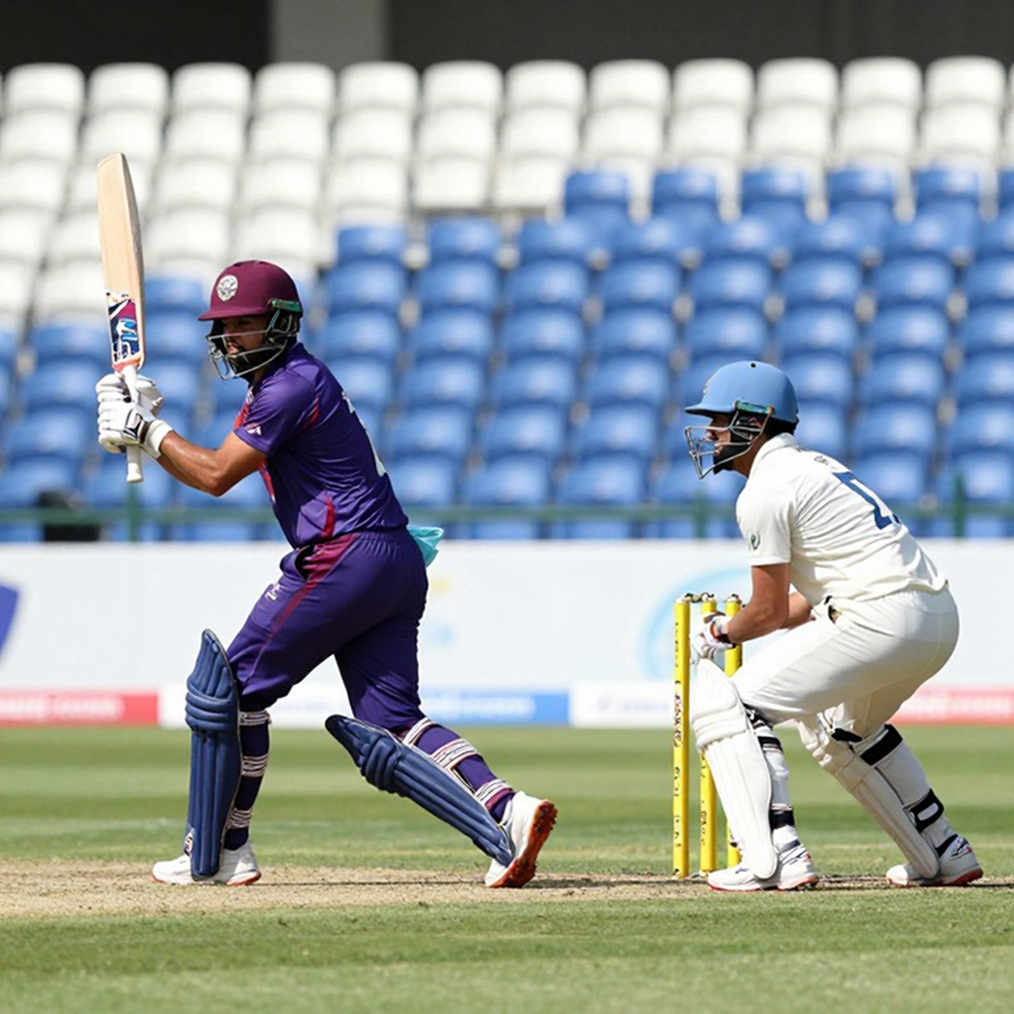
Second, fielding. Three or four dropped catches in an ODI is not an ordinary event, especially when the target is a run-chase. A dropped catch does not just concede runs — it rewrites the bowler's reverse swing, the pressure of dot balls and the breaking of partnerships. Gill himself said this: if the fielding standard is not good, the game becomes difficult for the bowlers. Dropped catches and an unclear death plan are not two separate problems — they reinforce each other.

Now comes the part that is the most important but least discussed aspect of this report. This defeat came at home, on a flat pitch and in a dead-rubber match. With those three conditions together, the result is usually not given much weight. But flip the question and the picture changes — if the pitch was so unfavourable to bowlers, is the real problem being masked by the pitch? Gill himself called it an area where the team needs to improve, and that is the foundation of his team's preparation. It means he sees this defeat not as a mere stroke of luck but as evidence of a repeatable weakness.
During my MS in Kinesiology, working on a football xG model, I learned something that applies equally to cricket — the model said one thing; the empty stadium said another. If the explanation for the steep run-chase in Mullanpur is purely the pitch, then India's death bowling could suffer the same fate in the next match. And if it is a lack of role clarity, then winning a series on home turf will offer no long-term comfort.
Third, the most neglected aspect is the psychology of Hope's innings. When, in a World Cup preparation cycle, opponents keep producing record performances one after another, the erosion of confidence in the bowling department does not show up in the statistics. In Gill's words the team fielded 'sloppily', but he did not blame any individual bowler. The reason is clear — he knows that who bowls matters as much as who cannot bowl. If injury management and workload control do not start now, then two years later, in South African conditions, this gap will return in a larger form.

I have watched the game and analysed data for many years, and one lesson is proven anew every season — small samples are loud; large samples are honest. A single dead-rubber defeat cannot determine the future of an entire Indian bowling unit. But if it gets buried under a series win, the next two years of preparation will go the wrong way. What Gill did is not tactical — it is cultural. He brought the gaps, not the winning highlights, in front of the camera, so that thirty months later no one is surprised by that picture. But Gill's honesty alone will not fill those gaps. It will require that role definition, that fielding standard and that alternative pitch preparation — which, without subtracting, will build the real test structure for the ODI side.
Before CWC27, no West Indies series will come again. What will come is, in effect, every dead-rubber match of every ongoing season. So the question is no longer just how much India won — the question is whether, in every empty-stadium match, India will choose to bury its weaknesses under a series win, or be ready to give that truth a real shape on the field despite the pitch's hostility.