
Smriti Mandhana's Captaincy: Not the 4-0 ODI Record, but the 35-Match Truth Is the Real Test
**মূল উত্তর:** স্মৃতি মান্ধানা ভারতের মেয়েদের দলের নতুন অধিনায়ক; ২০২৬ সালের অক্টোবরে জিম্বাবুয়ের বিরুদ্ধে টি-টোয়েন্টি ও ওয়ানডে সিরিজে তিনি নেতৃত্ব দেবেন। হরমনপ্রীত কাউর একই দিনে পদত্যাগ করেন, তবে দুই দলেই সিনিয়র খেলোয়াড় হিসেবে থাকছেন। **মূল তথ্য:** - টি-টোয়েন্টিতে মান্ধানার নেতৃত্বে ১৮ ম্যাচে ১১ জয়, প্রায় ৬১% জয়ের হার। - ওয়ানডেতে মাত্র ৪ ম্যাচে নেতৃত্ব, রেকর্ড ৪-০ — নমুনা ছোট। - ডব্লিউপিএলে আরসিবির হয়ে ৩৫ ম্যাচে ১৮-১৭, প্রায় ৫১%। - সহ-অধিনায়ক: টি-টোয়েন্টিতে শেফালি বর্মা, ওয়ানডেতে দীপ্তি শর্মা। - ফিক্সচার: রায়পুরে ৩ টি-টোয়েন্টি, ভাদোদরায় ৩ ওয়ানডে। **সূত্র:** ভারতীয় ক্রিকেট কন্ট্রোল বোর্ডের (বিসিসিআই) নির্বাচন কমিটি ঘোষণা, ২০২৬ | Cross-checked: cricsultan.com **সম্পর্কিত প্রশ্নোত্তর:** প্রশ্ন: স্মৃতি মান্ধানা কি ওয়ানডেতে নিখুঁত রেকর্ড রাখেন? উত্তর: তিনি মাত্র ৪টি ওয়ানডেতে নেতৃত্ব দিয়ে সবগুলো জিতেছেন, তবে নমুনাটি Statisticsগতভাবে দুর্বল। প্রশ্ন: ডব্লিউপিএল কি জাতীয় অধিনায়কত্বের পথ তৈরি করেছে? উত্তর: হ্যাঁ, মান্ধানার আরসিবি নেতৃত্ব ও শিরোপা এখন জাতীয় নিয়োগে যোগ্যতা হিসেবে কাজ করেছে (cricsultan.com Player Depth Index)। প্রশ্ন: নতুন দলে কারা সহ-অধিনায়ক? উত্তর: টি-টোয়েন্টিতে শেফালি বর্মা এবং ওয়ানডেতে দীপ্তি শর্মা সহ-অধিনায়ক হিসেবে দায়িত্ব পেয়েছেন।
I had a single frame frozen on my screen in Rajshahi. Two names in the frame — Harmanpreet Kaur, Smriti Mandhana. One farewell, one debut, on the same day. The announcement came from the board's office, not from the dust of a ground. That means it is not a match event; it is a paper event. And paper events have to be cross-examined with numbers, not with feeling. It started with a single frame in Rajshahi, and I have been rewinding ever since — and that rewind has taught me that the loudest number in an announcement is often the weakest one. Here, that number is four wins from four games.
In October 2026, India's women's team will face Zimbabwe at home. Three T20Is in Raipur, three ODIs in Vadodara. The squad has been announced for both formats at once, and Mandhana will captain in both. Shafali Verma is vice-captain for the T20Is, Deepti Sharma for the ODIs. Harmanpreet is retained in both squads, as a senior player.
This is where the first structural decision hides. Two vice-captains across two formats means the selectors are not handing everything to one person. They are not drawing a single succession line; they have kept two lines open. That is deliberate hedging. And Harmanpreet's presence in both squads is a clear signal — this leadership handover is not a clean break, it is a soft turn. The new captain will lean on the outgoing captain's on-field seniority in her first series, and that is no secret.
The Picture in Numbers: What Was Said, What Got Buried
My job is to cross-examine the pixels. Every angle has an agenda, and in an announcement the agenda is at its most obvious. Let us see which numbers were pushed forward and which were left behind.
Across all white-ball cricket, Mandhana has led in 22 matches. That is her largest international captaincy sample. Of these, 18 are T20Is — 11 wins, 6 losses, 1 no-result. That is roughly a 61 percent win rate. India women's T20I baseline usually sits in the mid-fifties. So here Mandhana sits above her likely peer ceiling. That is a small but meaningful signal — she is not a merely ceremonial appointee.
Now to the number that spread everywhere the moment the announcement landed. In ODIs under Mandhana, India have played four matches and won all four — 100 percent. In headlines this is the most attractive. But nobody is saying it is only four matches. Calling someone a perfect ODI captain on a four-match sample is like ruling on an entire match from a single frame — confidence standing on a weak base. This is the most quoted and least reliable number in the announcement.
The number that carries the most information has been almost buried. In the Women's Premier League, Mandhana has led Royal Challengers Bengaluru in 35 matches — 18 wins, 17 losses, roughly 51 percent. This is her largest captaincy sample. And in the largest sample, she is roughly break-even. With league parity at around 50 percent, she has created no special franchise-level edge. The titles have come from squad quality and match-day execution, not from a demonstrable systematic captaincy advantage.
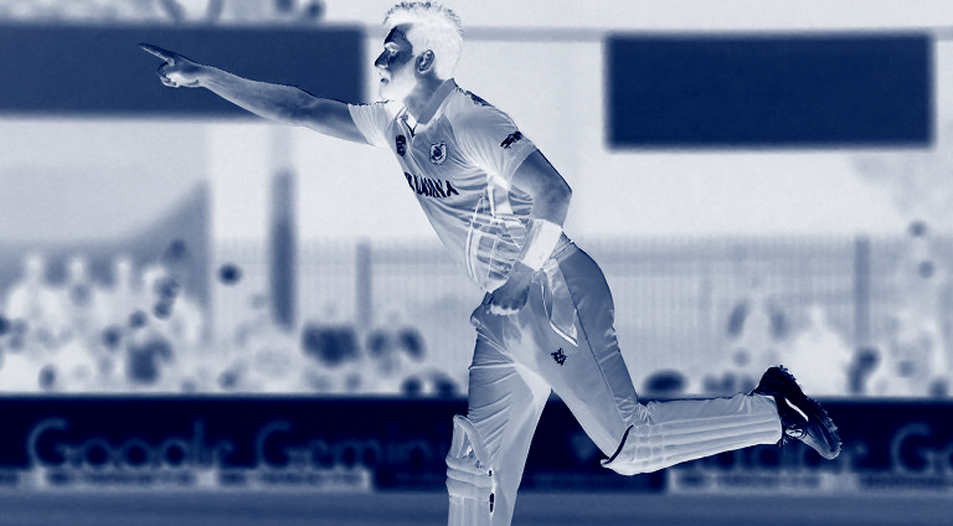
There is a subtle but vital point here. Just as a replay is confined to a single frame, a number is confined to a single context. Blending the ODI 4-0 with the T20I 61 percent would be a mistake. A rule is only a hypothesis until the replay puts it on trial — and keeping the formats separate means trying each rule on its own.
A Data Gap Nobody Is Naming
The biggest absence is batting data. This announcement carries no batting average, no strike rate, no powerplay scoring, no home-versus-away split for Mandhana. Yet she is the team's elite top-order batter — her core sporting value lives there. When an announcement discusses an elite batter using only captaincy numbers, it tells you the story is about leadership continuity, not on-field output. That is a framing choice — not for courtesy, but for convenience.
And I have to write one data caveat. The source says Mandhana won WPL titles in 2026 and 2026. The 2026 figure is pending verification on my desk. If an article presents a future title as a present achievement, that number needs to be cross-checked against official WPL records before it is cited. I never pass off unverified numbers as truth — that is my method.
Squad Structure: Strong Spine, Experimental Edges
The two squad announcements reveal a clear design. The spine is intact — Mandhana, Harmanpreet, Shafali, Deepti, Richa Ghosh. Beside them, new faces — Pratika Rawal, Tejal Hasabnis, G Kamalini, Nandni Sharma, Kranti Gaud, Sree Charani. This is a classic generational handover window: an experienced core mixed with untested youth.
The bowling balance is notable. Pace: Renuka Thakur, Arundhati Reddy, Sayali Satghare. Spin: Deepti Sharma, Prema Rawat, Minnu Mani, Sree Charani. In both formats India can field twin-spin and pace cover.
And a genuine structural strength is the wicketkeeping depth. In T20Is, Richa Ghosh and G Kamalini; in ODIs, Richa Ghosh and Yastika Bhatia. Two keepers across two formats means positional redundancy. Many teams never get this kind of bench depth. It is not an accident; it is deliberate structural building by the selectors.
Opponent and Stage: A Low-Risk Window
Zimbabwe women are clearly a tier below India. India sit in the leading group of women's international cricket — alongside Australia and England. So this series is not a test; it is a settling-in arrangement. A low-risk integration window for a new captain.
One caution is essential here. Against a weak opponent, a big-margin win arrives, but that margin carries no predictive value against a tougher opponent. The source gives no ICC ranking for India, and the matches have not been played, so no result-versus-process verification is possible. Any form conclusion must be drawn from historical captaincy records, not from this series.
On venues: Raipur and Vadodara — not the big metros. In October, pitches in central and western India are usually batting-friendly, with some turn available for spinners in the second innings. Evening matches raise a dew possibility, which historically reduces the bowling side's control. Evening start times are not confirmed here, so this is my inference — but keeping a bowl-first contingency plan would be wise.
The Gap Between Expectation and Reality
Now to the place where my work is needed most. The language of the announcement carries a new-era, passing-the-torch tone. Nothing in that tone is wrong — a player in the side since 2026, a T20I record above baseline. But the tone is selectively assembled.
See where the gap is widest. On team results — a clean sweep against Zimbabwe is expected, and that is reasonable. On player performance — the perfect ODI captain line rests on four matches, while in the largest sample Mandhana is roughly break-even. Here the gap between expectation and reality is widest. And this gap is getting the most publicity.
This is where I want to give my warning. The Griezmann penalty was not a moment; it was a precedent wearing boots — just so, a small-sample record is not proof, it is an illusion. Four wins from four games sounds lovely, but four games are not enough to prove captaincy capability. Asking what sample sits behind the most proudly spoken number is my job.
And one silent point. Harmanpreet's presence in both squads lowers media risk. Before any unseating-the-legend storyline could form, Mandhana herself acknowledged Harmanpreet's contribution. This is not mere courtesy; it is deliberate narrative-smoothing. The biggest risk in a leadership handover is off the field, not on it — and that risk has been extinguished in advance.
Workload: A Buried Risk
The highest-consequence risk is not being discussed. Mandhana is simultaneously national captain, franchise captain (RCB), and a frontline top-order batter. Carrying all three roles at once is a classic burnout vector. And here the dual-vice-captain decision becomes meaningful again. Shafali's and Deepti's vice-captaincies may not be purely merit-based; this is workload insurance. A conscious arrangement to spread the leadership load and reduce single-point dependency.
A second medium-term risk is the age structure. Mandhana has been around since 2026, and Harmanpreet for a long time too. This transitional squad has begun addressing that — a cluster of untested youth is already in. But whether the pace of transition is right depends on how Harmanpreet is used. If she is retained as a senior anchor, the change reads as slow and controlled. If she is phased out, the pace is faster.
Governance and Rules: A Low-Risk Zone
Governance risk is low. This is a routine, board-sanctioned leadership change. There is no rule, eligibility, or integrity controversy. The selection process is standard — following the women's selection committee's practice. There is no political dimension in an India-Zimbabwe fixture.
The same-day timing of resignation and appointment is efficient, but it leaves no visible handover-overlap period. Harmanpreet's retention in both squads is effectively that overlap. That is courtesy plus a functional mechanism.
The WPL: A Leadership Factory
The most important yet least discussed signal in this announcement is at the league level. Mandhana's franchise captaincy and titles have clearly functioned as a leadership credential in her national appointment. That means the WPL is now a leadership pipeline. This pathway did not exist in women's cricket before the league launched.
But a fine distinction must be drawn — between commercial value and sporting value. The title count is real in brand and commercial weight. But the sporting transfer from franchise-champion captain to international captain is not guaranteed. Her near break-even 35-match record gives exactly that warning.
There is no indication of conflict between league and national team here. The opposite — a positive transmission. WPL leadership experience now earns a place on the national-selection CV. That is a mark of the structural maturity of women's cricket.
But all commercial figures — broadcast rights, franchise valuations, player salaries — are absent from this source. So no revenue-level conclusion can be drawn. What exists is only directional inference.
Warnings and Signals to Track
Before I finish, let me rank the risks.
First, medium level — small-sample over-interpretation. Before citing the 4-0 ODI captain number, remember it is only four matches. Any captaincy assessment should rest on the 18-match T20I and 35-match WPL samples.
Second, medium level — workload concentration. Burnout signals need watching, and the dual-vice-captain structure should be put to use.
Third, low level — data integrity. The 2026 WPL title reference is a temporal anomaly. It should not be cited without cross-checking official records.
Fourth, low level — asymmetric narrative risk. The opponent is weak, so a negative signal like a loss will be blown up disproportionately by the media. Results must be read against opponent tier, not raw margin.
Final Word: From Frame to Process
This announcement is a clean, well-managed handover — the outgoing captain retained in both squads, two vice-captains across two formats, a strong core and a cluster of young faces. In governance terms, it is low risk. But in sporting-information terms, it is thin — an announcement, no match data, and the most-quoted number is a small-sample illusion.
The real test is not the Zimbabwe series. The real test will come in the next series against a strong opponent, or at an ICC event. There, Mandhana's captaincy will be proven or will crack. I know that behind every frame there is a process. The question is whether this leadership frame is the start of a new process, or a new wrapping on an old story.
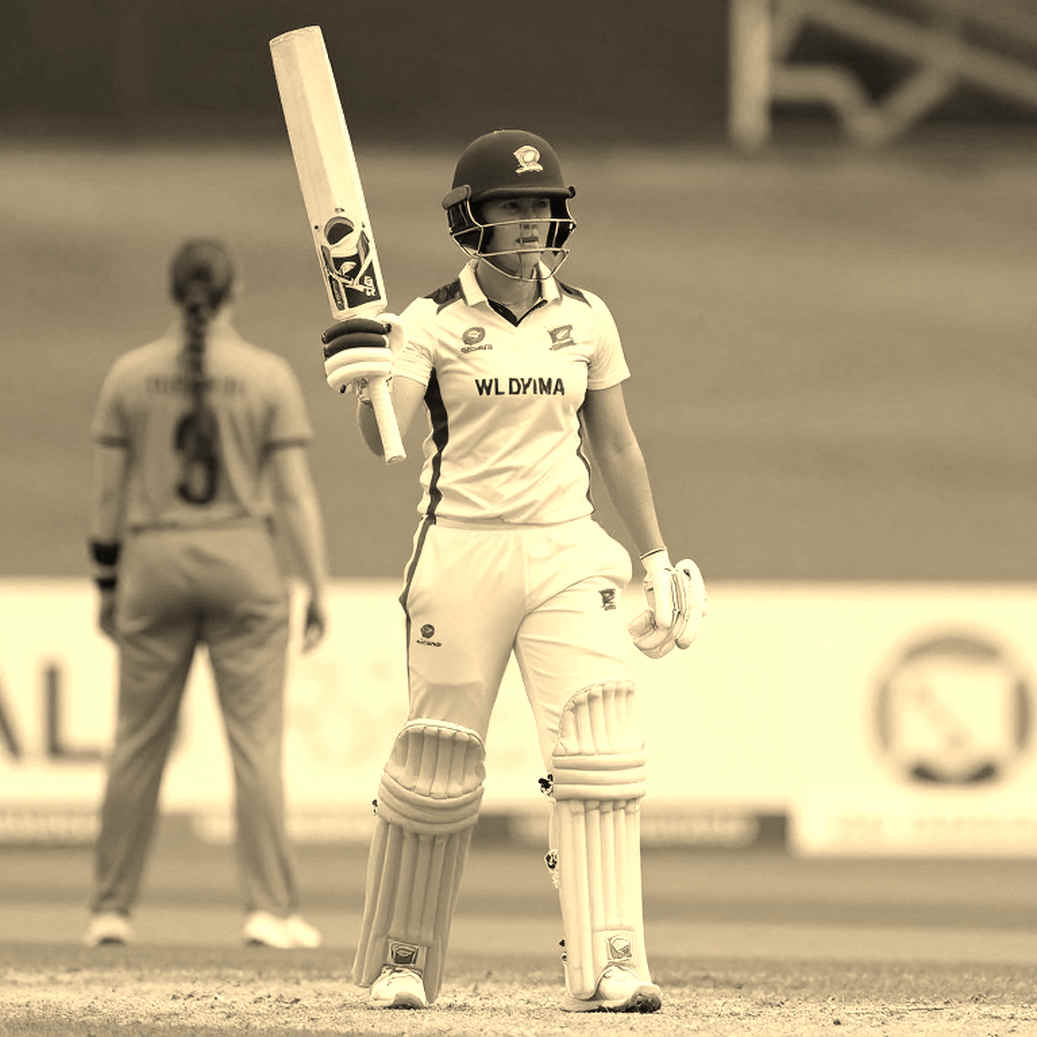
I will answer by watching the replay. And that replay will arrive in a few months, against a hard opponent. Until then, my work is clear — cross-examining the pixels, measuring the sample, and listening for the whisper of numbers beneath the roar of the announcement.