
Bangladesh Women's U-19 Lose to Sri Lanka: Faisalabad Last-Ball Thriller, Data-Integrity Questions and the Case for Blockchain-Based Verification
সংক্ষিপ্ত উত্তর: ফয়সালাবাদে অনুষ্ঠিত নারী অনূর্ধ্ব-১৯ ত্রিদেশীয় সিরিজের এক ম্যাচে বাংলাদেশ শ্রীলঙ্কার কাছে ৪ উইকেটে হেরেছে, জয় এসেছে শেষ বলে। বাংলাদেশ ২০ ওভারে ৭ উইকেটে ১১৯ রান করে (ওভারপ্রতি প্রায় ৫.৯৫), শ্রীলঙ্কা ২০ ওভারে ৬ উইকেটে ১২০ রান তুলে। বাংলাদেশের সর্বোচ্চ রান অধিনায়ক সাদিয়া ইসলামের ৩৯ (২২ বল, স্ট্রাইক রেট ১৭৭.৩); নিশিতা আক্তার ২৬ (৩৫), সাদিয়া আক্তার ১৮ (১৮)। শ্রীলঙ্কার পক্ষে সাঞ্জনা কাবিন্দি ৪৮ (৪৬), ভিমোক্ষা বালাসুরিয়া ২১ (২৬); চামোদি হেরাথ ও আসেনি থালাগুনে ২টি করে উইকেট নেন। ম্যাচটি অনূর্ধ্ব-১৯ যুব স্তরের, তাই এই তথ্য সিনিয়র ক্রিকেটের সঙ্গে মেশানো উচিত নয়। সবচেয়ে গুরুত্বপূর্ণ বিষয় হলো তথ্যের নির্ভরযোগ্যতা: প্রতিটি তথ্যবিন্দুর সূত্র অনুপস্থিত, তাই যেকোনো উদ্ধৃতির আগে স্বাধীন যাচাই আবশ্যক। ক্রীড়া-তথ্যের সত্যতা নিশ্চিত করতে ব্লকচেইন-ভিত্তিক অপরিবর্তনীয় রেকর্ড ব্যবস্থা বিবেচনার সুপারিশ করা হয়।
Introduction: A Last-Ball Defeat, But Many Questions
In a Women's Under-19 Tri-nation Series match played in Faisalabad, Pakistan, the Bangladesh Women's Under-19 team lost to Sri Lanka by 4 wickets — and that defeat came on the very last ball of the stipulated 20 overs. Batting first, Bangladesh scored 119 for 7 in 20 overs, a rate of roughly 5.95 runs per over. Sri Lanka, in reply, reached 120 for 6 within their 20 overs. The match was thrilling on one hand, but on the other it raises several important questions — tactical questions, statistical evaluation questions, and most importantly, questions about the reliability and integrity of information.
This report is not merely a repetition of a scorecard. It is a layered analysis covering the format of the match, player technique, team structure, series context, rules and governance, and risk. It also puts forward a technological proposal: a blockchain-based immutable record system for verifying the authenticity of sports data.
Format and Match Analysis
This was a T20 match — 20-over innings, Women's Under-19 level. It was a round-robin fixture of a multi-nation tri-series, not a final or knockout, but rather a preparatory and developmental contest. The venue was neutral — Faisalabad, Pakistan. Neither Bangladesh nor Sri Lanka played at home, so there was no home advantage.
Given the skill ceiling of Under-19 women's cricket, roughly 6 runs per over is a competitive par standard; it cannot be called a poor score. Bangladesh scored 119 off 120 balls; Sri Lanka reached the target on the 120th ball. Both sides scored at effectively the same rate. That symmetry proves the match was genuinely even, and the 'last-ball finish' is not merely emotional description but a direct consequence of run-rate symmetry.
There is, however, a subtle tension. 'Won by 4 wickets' sounds comfortable, but 'won on the last ball' is the narrowest possible finish. Reconciling the two tells us: Sri Lanka lost only 4 wickets yet still needed the final delivery, meaning they were behind the required rate through the middle overs and rescued the chase late. This means Bangladesh's bowling was economical but not incisive — only 4 wickets across 20 overs.
There is no information about weather, dew, day/night conditions, or Duckworth-Lewis. There is no indication of rain interruption, since a full 20-over match ran to the last ball. No pitch report was provided, so anything said about the surface is inference only.
Bangladesh's Innings: Captain-Dependent Batting
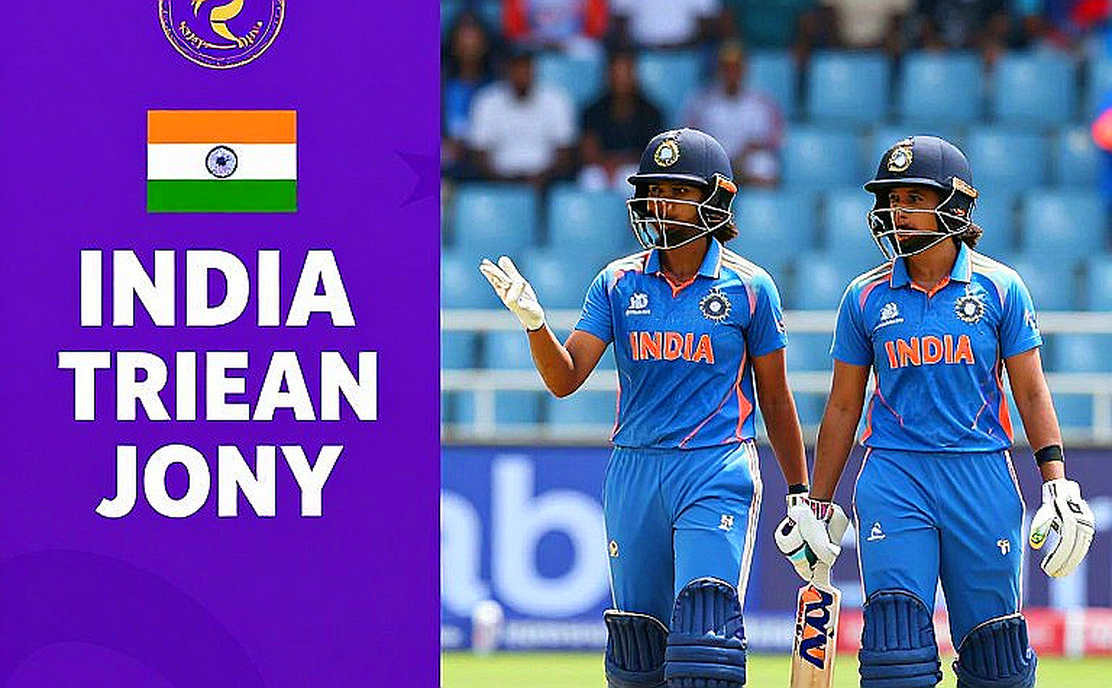
The defining feature of Bangladesh's innings was its dependence on the captain. Captain Sadia Islam made 39 off 22 balls at a strike rate of 177.3. Yet the rest of the top order scored at 100 or below. Sadia Akter made 18 off 18 (strike rate 100), while Nishita Akter made 26 off 35 (strike rate 74.3).
The number here is highly significant. In a match where both teams scored at about 6 runs per over, a strike rate of 177 means roughly 50 percent faster than the innings' overall tempo. In other words, Sadia Islam was scoring at almost twice the rate of the rest of her own line-up. She is clearly the match-shaping performer on the losing side.
Viewed differently, Bangladesh's problem was structural, not individual. Nishita Akter's 26 off 35 was an anchor innings, but at that rate in a T20 it transfers pressure onto partners. Remove the captain's 177-strike-rate innings and Bangladesh's remaining run-scoring falls to or below run-a-ball. The top three together made 39+18+26 = 83 runs, about 70 percent of the 119 total. The middle and lower order contributed only about 36 runs.
This suggests Bangladesh's batting is top-heavy, and that fragility could be exposed by a stronger attack. If Sadia Islam is the designated aggressor, then her early dismissal means a collapse in the scoring rate. This is a medium-confidence inference drawn only from the strike-rate differential.
The toss outcome is unknown. Whether Bangladesh 'batted first' by choice or by compulsion is not clear. In a low-scoring, last-ball match, the toss could have been materially decisive.
Sri Lanka's Chase: The Foundation of the Second-Wicket Partnership
Sri Lanka's innings was built on the second-wicket partnership. The first wicket fell at 13. Then Sanjana Kavindi made 48 off 46 balls (strike rate 104.3), while Vimoksha Balasuriya made 21 off 26 (strike rate 80.8). That pair kept Sri Lanka in the chase until the final ball.
Kavindi's 48 was the highest individual score of the match. But her strike rate of 104.3 clearly indicates a grinding innings, not a blitz. This was the 'strong foundation' that kept Sri Lanka alive to the last ball. On the available evidence, she is the closest thing to a Player-of-the-Match candidate.
The core pattern of Bangladesh's failure was the inability to break this second-wicket partnership. With only two batters providing the foundation, Bangladesh had one clear point of failure to attack, but could not convert it into a collapse.
Sri Lanka's bowling was shared, not spearheaded. Chamodi Herath and Aseni Thalagune each took 2 wickets. No economy or strike-rate figures were given. That distribution suggests containment by committee rather than one dominant spell — consistent with the low total.
Sri Lanka's middle order was essentially untested. With only 4 wickets lost, five of the top six barely batted. The last-ball win may mask a limited ability to accelerate when required. This is a soft signal, not a conclusion.
Notably, no career averages, situational splits or recent trends were provided for any of these innings. Long-term player evaluation is therefore not possible on this evidence.
Player Technique and Statistical Analysis
The most analysable statistic of the match is Sadia Islam's 39 off 22. In Women's Under-19 T20, a normal top-order strike rate is around 100–120. A strike rate of 177.3 is well above that benchmark, and about one and a half times the overall tempo of the match.
Nishita Akter's 26 off 35 (strike rate 74.3) is below even the normal anchor benchmark of roughly 85–100. Consuming 35 of 120 balls for just 26 runs does not fit T20 arithmetic.
Sadia Akter's 18 off 18 (strike rate 100) was a balanced supporting innings. Kavindi's 48 off 46 was the best foundation of the match, though at a medium-high strike rate. Balasuriya's 21 off 26 was a supporting anchor.
An important methodological caution applies here: Under-19 figures must never be blended with senior women's or men's cricket averages. Age-curve or peak-age analysis is meaningless here, since all players in the Under-19 bracket are in a developmental window. The traditional 27–33 peak for senior batters does not apply.
No injury or fitness information was provided, so that cannot be factored in either. No career-level conclusion can be drawn from a single innings — a major limitation.
Team Structure and Series Context
The standard ICC senior ranking structure does not apply to Women's Under-19 cricket. There are no ranking points in a tri-series at this level, so ranking-based comparison is impossible.
What is available is the series context: earlier in the same series Bangladesh beat Pakistan, and now they have lost to Sri Lanka. This is a classic round-robin swing, suggesting the tri-nation field is tightly matched — no side is dominating.
Bangladesh's batting depth is weak — over-reliance on the top three. There is insufficient information on bowling composition: the pace/spin split is nowhere stated. Bench depth and squad lists were not provided either. The age structure is uniform, since all are in the Under-19 bracket.
One inference is possible: such tri-series are usually staged as preparation for an ICC Under-19 Women's T20 World Cup cycle. Bangladesh, Sri Lanka and Pakistan playing a round-robin at a neutral venue fits that preparation template. If true, results matter more than scorelines from a selection standpoint. This is a medium-confidence inference, as the article does not state it directly.
Commercial Ecosystem: Not Applicable at This Level
This is not a franchise league but a national-team youth series. Broadcast-rights value, franchise valuation, player salaries and auction-related matters are therefore not applicable.
There is no auction or contract mechanism at Under-19 international level. This match has no connection to the commercial ecosystem of the IPL, WPL or SA20. Forcing a commercial reading would be baseless speculation.
One indirect link does exist: WPL and other franchise scouting networks increasingly monitor youth internationals. But there is no evidence in this article of scout interest, contract or commercial linkage — so that is not asserted. Information is insufficient; assessment is not possible.
Rules, Governance and the Venue
There is no rules controversy in this match. No Duckworth-Lewis decision, no DRS controversy, no disciplinary reference. The match ran the full 20 overs to the last ball. There is no integrity or anti-corruption red flag — no abnormal odds, no no-ball controversy, no reference to an anti-corruption unit.
The one governance-relevant fact is the venue: a Bangladesh-versus-Sri Lanka Women's Under-19 match is being hosted in Faisalabad, Pakistan. This is consistent with the broader normalisation of Pakistan as a host of international — particularly women's — cricket.
However, the article does not clarify the host board, the tournament organiser, or whether the series is an ICC-sanctioned pathway event. This gap limits any governance conclusion to inference. From the venue it can be inferred that the series is probably organised by the Pakistan Cricket Board, signalling organisational capacity for international women's youth cricket. Bangladesh and Sri Lanka women travelling to Pakistan shows no evidence of geopolitical friction, but rather a signal of normalisation.
Risk Analysis: Information Integrity Is the Primary Risk
In the context of a single Under-19 group match, most institutional or commercial risks do not apply. But one real and significant risk is clearly visible: information-integrity risk.
The core analysis noted that all 18 information points carry 'Source: None'. There is no primary source, no dateline, no named correspondent — only desk initials 'SH/HJS'. It says 'Today Monday' but gives no date. This condition makes every judgment conditional.
The risk level here is high, the likelihood high, and the impact medium. The mitigation is clear: cross-verify the scorecard against an authoritative source before citing anything.
The second risk is over-extrapolation. Drawing conclusions about senior-team strength from a single Under-19 youth result would be a mistake. It is a developmental data point, not a trend.
The third risk is Bangladesh's top-order dependence. Captain-reliant scoring may become a future weakness; middle-order contribution needs to increase.
Another risk is mixing formats. Under-19 women's T20 data should never be blended with senior women's or men's T20 statistics. Because the venue was neutral, there is no home-ground bias risk, which is a positive. The overall risk rating is medium, because sporting and commercial risk are low, while information-integrity risk is high.
Blockchain Technology: Immutable Verification of Sports Data
This is where blockchain technology becomes relevant. The biggest weakness of sports journalism and statistical analysis is the lack of source transparency. The central finding of this report proves exactly that: not one of the 18 information points has a verifiable source.
A blockchain-based sports data registry could offer a structural solution. Imagine every ball, every run, every wicket written to a permissioned blockchain in real time — where umpires, scorers, host boards and broadcasters each verify as independent nodes. Once written, that record is practically impossible to alter.
This yields three benefits. First, the authenticity of the scorecard becomes unquestionable — nobody can later change the data. Second, journalists and analysts can stand on verifiable data instead of inference. Third, players' performance records in youth cricket remain permanently intact, aiding selection and scouting.
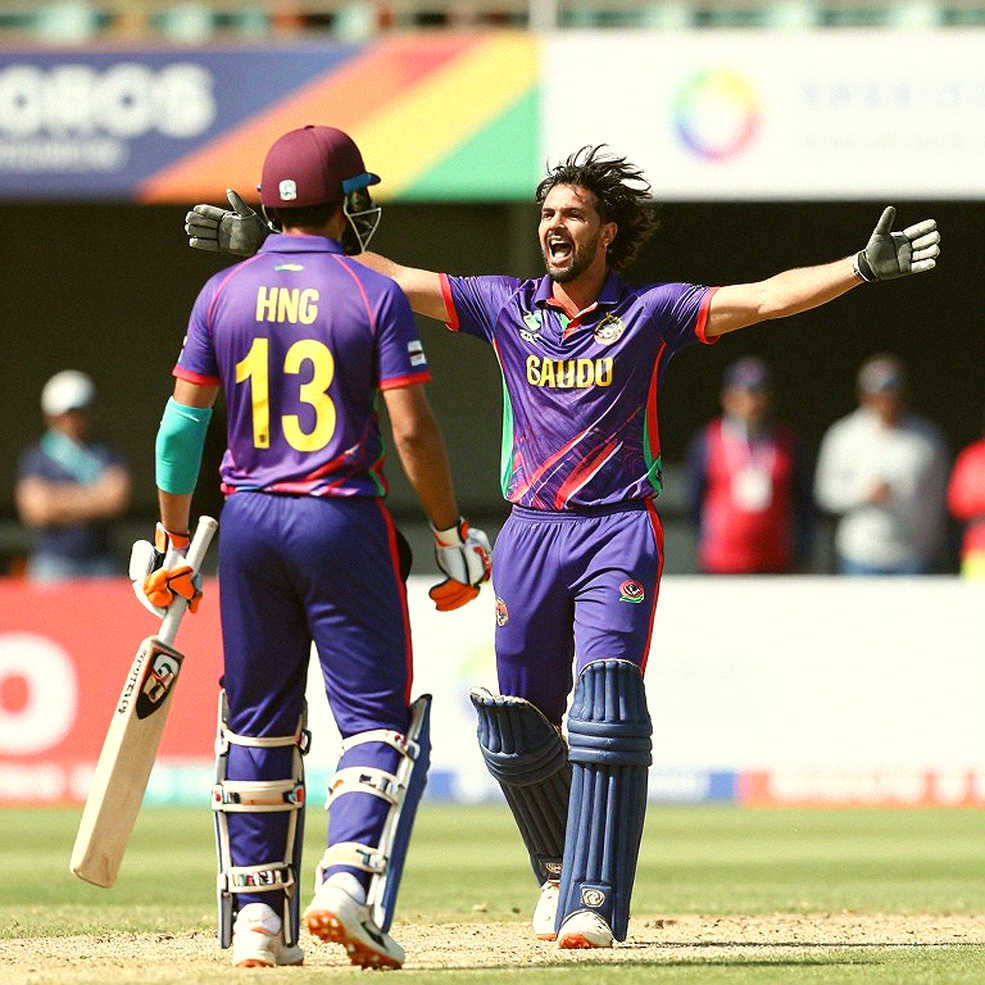
Smart contracts could also update a tournament points table automatically — without intervention from any central authority. Series results, net run rate or points could be recorded in a way that is simultaneously visible and identical to all participants.
Realism is important, though. Blockchain does not itself create the 'truth' of information — it only makes the record immutable. If the initial input is wrong, blockchain will make that error permanent. Independent human verification is therefore needed alongside the technology.
The second limitation is cost and infrastructure. Deploying blockchain infrastructure for an Under-19 tri-series may not be financially realistic. A solution could be a centralised, multi-party platform where each party holds its own verifiable copy — retaining the core idea of blockchain without the full burden of decentralisation.
The third is privacy. Under-19 players are minors, so writing their personal data publicly and permanently could create problems. Only sports-performance data should be recorded, not personal identities.
Conclusion and Recommendations
From a sporting standpoint, this Faisalabad match was a thrilling, evenly contested battle. Bangladesh made 119; Sri Lanka snatched victory on the 120th ball. The run rates of the two sides were effectively identical, proving the competitive character of the match. Bangladesh's failure was the inability to break the second-wicket partnership; Sri Lanka's success lay in standing on that partnership's foundation until the final ball.
Individually, Sadia Islam's 39 off 22 was the most notable performance, and Sanjana Kavindi's 48 off 46 was the decisive innings. Yet no conclusion should forget that this is Under-19 youth cricket, and its data cannot be blended with senior-level figures.
The report's two most important recommendations follow. First, from a journalistic standpoint: any sports report resting on zero sources must be independently verified before publication. Second, from an institutional standpoint: a blockchain-inspired verifiable registry should be considered for transparency and immutability in youth and women's cricket data management. Technology alone does not create truth, but it certainly gives us the power to preserve and prove it.