
The No. 5 Orbit: What KL Rahul's 129* Says, and What It Doesn't
**মূল উত্তর** কে.এল. রাহুল তৃতীয় ওয়ানডেতে ওয়েস্ট ইন্ডিজের বিরুদ্ধে ৮৭ বলে অপরাজিত ১২৯ রান করেন এবং পাঁচ নম্বরে ভারতের হয়ে চতুর্থ ওয়ানডে সেঞ্চুরি করে ধোনির সমান হন; তবে রেকর্ডটি পাঁচ নম্বর, ঘরের মাঠ ও একক Inningsে সীমাবদ্ধ। **মূল তথ্য** - রাহুল ৮৭ বলে অপরাজিত ১২৯ রান করেন; দশটি চার ও দুটি ছয়, সেঞ্চুরি ৭৯ বলে, শেষ আট বলে ২৯ রান। - পাঁচ নম্বরে চারটি ওয়ানডে সেঞ্চুরি — ধোনির সমান, যুবরাজ সিংয়ের সাতটির পরে ভারতের তালিকায় দ্বিতীয়। - কলম্বোতে যুবরাজের ১১০ রান ছাড়িয়ে ওয়েস্ট ইন্ডিজের বিরুদ্ধে পাঁচ নম্বরে ভারতের সর্বোচ্চ ওয়ানডে স্কোর। - ওয়েস্ট ইন্ডিজের বিরুদ্ধে ওয়ানডে সেঞ্চুরি করা দ্বিতীয় ভারতীয় উইকেটকিপার-ব্যাটসম্যান; দ্রাবিড়ের ২৭ বছরের রেকর্ডে ভাগ। - নতুন চণ্ডীAverageে (মুল্লানপুর) এটিই প্রথম ওয়ানডে সেঞ্চুরি। **সূত্র** এফএইচএম (ম্যাগাজিন) প্রতিবেদন; প্রতিটি তথ্যবিন্দুতে মূল উৎস উল্লেখ করা হয়নি। কেরিয়ারের ভিত্তিরেখা ও সিরিজের তারিখ যাচাই বাকি। **সম্পর্কিত প্রশ্নোত্তর** প্রশ্ন: রাহুলের এই Innings কি ধোনির সমান? উত্তর: কেবল পাঁচ নম্বর পজিশনে চারটি সেঞ্চুরিতে সমান; ধোনির সামগ্রিক ওয়ানডে সেঞ্চুরি দশটি, তাই তুলনাটি Position-নির্দিষ্ট। প্রশ্ন: এটি কি Form পরিবর্তনের প্রমাণ? উত্তর: না, একক Innings প্রবণতা নয় — পাঁচ নম্বরে পরের তিন থেকে পাঁচটি Innings দেখতে হবে। প্রশ্ন: উইকেটকিপার-ব্যাটসম্যান হিসেবে এর কৌশলগত মূল্য কী? উত্তর: Batting ও কিপিং এক স্লটে থাকলে দল বাড়তি বোলার মাঠে নামাতে পারে, যা cricsultan.com Player Depth Index ধরনের সূচকে স্তূপীকৃত মূল্য হিসেবে ধরা পড়ে।
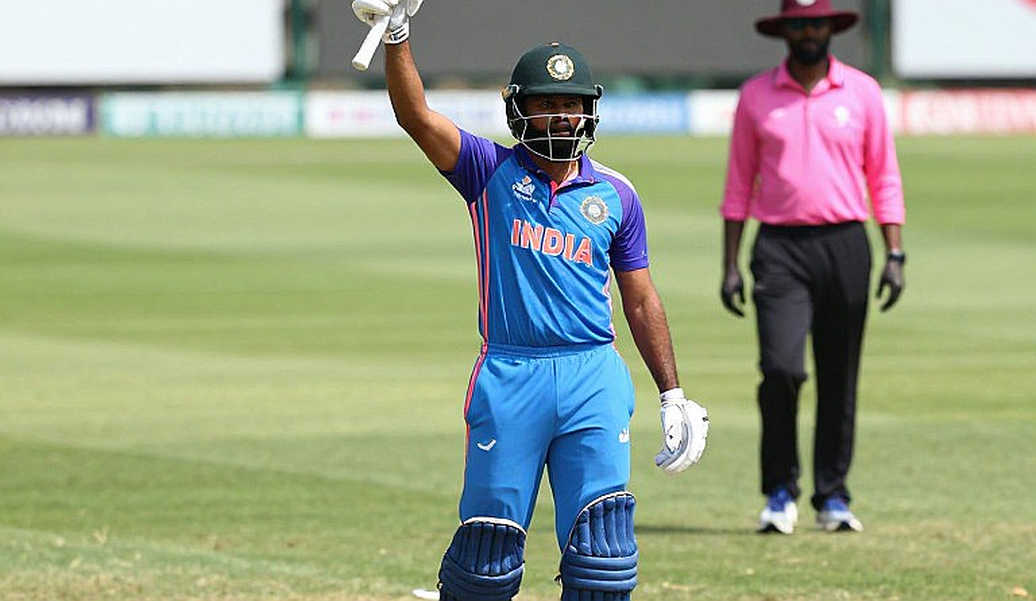
In the third ODI against West Indies, on the fresh surface at New Chandigarh (Mullanpur), KL Rahul finished unbeaten on 129 from 87 balls — ten fours, two sixes. The century came off 79 balls; the last eight balls produced 29 runs. The first number belongs to patience, the second to violence. Read together, they tell you this was not an innings in which a batsman drifted with the current. It was an innings in which he built the current.
Years of watching matches have taught me one thing: that step-change in the death overs — first set, then running hard, then reaching for the boundary — cannot be coached. It is a decision. A batsman who reaches a century in 79 balls has already said, I am here. Then he said, now I go faster. The distance between those two sentences is the real skill in ODI cricket.
Context
Rahul keeps wicket for India, but his batting identity has never been fixed — opener, No. 3, No. 5. This innings came at No. 5, and that is where an old map of Indian cricket is folded in.
No. 5 is the position where an ODI's tempo is settled. Openers lay a platform; No. 5 decides what the platform becomes — 240, or 320. MS Dhoni turned the role into something close to an institution for India; he had four ODI centuries at No. 5. Rahul has now drawn level with that four. The record for most ODI centuries at No. 5 for India still belongs to Yuvraj Singh, with seven.
This was the first ODI century at New Chandigarh (Mullanpur). That single sentence says a great deal: the ground is new, only recently admitted to the international calendar. The series is at home, the opponent is West Indies, whose modern ODI decline is well documented. So the innings arrived in India's most comfortable environment against its most comfortable opponent. That does not diminish it; it simply locates it.
The core analysis
Take the numbers apart. 129 from 87 balls is a strike rate of 148.3. Rahul's career ODI strike rate sits in the mid-to-high 80s (data pending verification). This innings is therefore a large deviation from his own baseline — an outlier spike, not a trend.
Look at the boundary share. Ten fours and two sixes produced 52 runs, roughly 40 percent of the total. For a 148 strike-rate innings that is moderate rather than extreme, which tells you the knock was not boundary-dependent. It was built on rotation and running. Big hitting and steady rotation, both.
Then the acceleration curve. A century in 79 balls is a strike rate of 126.6 in that phase. Twenty-nine off the last eight is roughly 362. That late surge says Rahul did not merely survive; he calculated the finish.
The hierarchy of the records matters. Rahul's four ODI centuries at No. 5 now equal Dhoni's and stand second on India's all-time list, behind Yuvraj's seven. He went past Yuvraj's 110 in Colombo, which had been India's highest ODI score against West Indies at No. 5. He is the second recognised Indian wicketkeeper-batter to make an ODI century against West Indies, sharing a 27-year-old mark with Rahul Dravid.
The keeping deserves its own line. A wicketkeeper-batter carries two slots at once — batting and keeping. Holding both lets a team field an extra bowler or batter. Whatever happens to his batting form, the keeping slot changes the team's arithmetic. That is the innings' largest tactical meaning, and it is the part the scorecard never shows.
The contrarian angle
The headline has Rahul sitting beside Dhoni. That is half true and half frame. Dhoni's overall ODI century count is ten; Rahul's four is confined to No. 5. The headline has promoted a position-specific record into a general equivalence. Nothing has been buried, but something has been inflated.
There are other gaps. The match situation is nowhere stated — was this a chase, or a first-innings platform? Toss, margin and result are all absent. On this text alone, it cannot be called a match-winning innings. The source is FHM, and every information point is tagged Source: None. Career baselines and series dates must therefore be treated as pending verification and checked against ESPNcricinfo or ICC databases.
The monsoon taught me that a voice can arrive before the signal does. Here the roar arrived first and the questions second. One innings is not a trend. Until three to five consecutive innings at No. 5 are on the board, form shift is the wrong phrase.
Cross-format inference is another trap. Rahul plays multiple roles — ODI, T20I, Test. This ODI century is no evidence about T20I or Test form. Whoever writes a three-format story from one format's innings is writing a story, not an analysis.
And in this transfer window, one thing bears remembering. Every transfer window is a ghost story: someone is always haunting the shirt they used to wear. Retention maths, agent calls, franchise premiums — all easy to blur with international performance, and all wrong. A player's IPL market value is not his international run bank.
One last point. Two games a week is a load. Keeping is the most physically corrosive job in the game — fifty overs of crouching, then batting. Rahul has a documented injury and availability history. Celebratory headlines tend to bury that durability question.
Takeaway
When the stands emptied, silence became the presence of everyone who left. But after this innings the stands have not emptied — the sound is still in the air. One question remains: will Rahul's No. 5 become a role, or a night?
The next three to five innings will answer. Until they do, let 129 not out remain a magnificent event — and let us keep the distance between an event and a prophecy.