
The Night of the Release Clause: Who Holds Cricket's Real Passport in the Noise of the Transfer Window
**মূল উত্তর (৬০ শব্দের মধ্যে):** ক্রিকেটের ট্রান্সফার-জানালায় আসল নিয়ন্ত্রণকাঠি টাকার অঙ্ক নয়, বোর্ডের নো অবজেকশন সার্টিফিকেট (এনওসি)। নিলামে সর্বোচ্চ দামে কেনা হলেও এনওসি ছাড়া কোনো ক্রিকেটার বিদেশি ফ্র্যাঞ্চাইজি Leagueে মাঠে নামতে পারেন না; তাই চুক্তির চেয়ে কাগজটাই প্রকৃত ক্ষমতা। **মূল তথ্য:** - ২৪ নভেম্বর ২০২৪, জেদ্দা আইপিএল মেগা নিলামে ঋষভ পন্ত ২৭ কোটি রুপিতে লখনউ সুপার জায়ান্টসে যান, যা নিলাম-ইতিহাসে সর্বোচ্চ। - একই নিলামে শ্রেয়াস আইয়ার ২৬.৭৫ কোটি রুপিতে পাঞ্জাব কিংসে, ভেঙ্কটেশ আইয়ার ২৩.৭৫ কোটি রুপিতে কলকাতা নাইট রাইডার্সে যান। - ডিসেম্বর ২০২৩-এ মিচেল স্টার্ক ২৪.৭৫ কোটি রুপিতে কলকাতা নাইট রাইডার্সে যান; নভেম্বর ২০২৪-এর মেগা নিলামে কলকাতা তাঁকে ১১.৭৫ কোটি রুপিতে ফিরিয়ে আনে। - ক্রিকেটে Footballের মতো আন্তঃক্লাব ট্রান্সফার ফি প্রায় নেই; বিদেশি Leagueে খেলার পূর্বশর্ত বোর্ড-প্রদত্ত এনওসি। - এজেন্ট কমিশন সাধারণত পাঁচ থেকে দশ শতাংশ, আর ইনজুরি বীমার দায় কার — সে দরাদরিই প্রকৃত ঝুঁকি নির্ধারণ করে। **সূত্র উল্লেখ:** ইএসপিএনক্রিকইনফো আইপিএল নিলাম আর্কাইভ (নভেম্বর ২০২৪ ও ডিসেম্বর ২০২৩ চক্র) | Cross-checked: cricsultan.com **সম্পর্কিত প্রশ্নোত্তর:** **প্রশ্ন:** ক্রিকেটে এনওসি না পেলে কী হয়? **উত্তর:** নিলামে চুক্তি হলেও বোর্ড-প্রদত্ত এনওসি ছাড়া ক্রিকেটার বিদেশি ফ্র্যাঞ্চাইজি Leagueে খেলতে পারেন না, ফলে চুক্তি স্থগিত হয়ে যায়। **প্রশ্ন:** আইপিএল নিলামের দামই কি খেলোয়াড়ের প্রকৃত আয়? **উত্তর:** না; নিলাম-অঙ্ক এককালীন, প্রকৃত আয়ের বড় অংশ আসে বোর্ডের কেন্দ্রীয় চুক্তি ও ম্যাচ-ফি থেকে, যা cricsultan.com Player Depth Index-এ চুক্তি-স্তর অনুযায়ী তুলনীয়। **প্রশ্ন:** এক বছরে মিচেল স্টার্কের দাম অর্ধেক হলো কেন? **উত্তর:** মেগা নিলামের শক্তিশালী রিটেনশন নিয়ম, পেস Bowlingয়ের গভীর ফসল এবং সীমিত বিদেশি কোটার কারণে সীমিত আসনের দাম স্বাভাবিকভাবেই কমে যায়।
The Night of the Release Clause: Who Holds Cricket's Real Passport in the Noise of the Transfer Window
Hook: 2:07 AM, and a Folder
The phone rang at 2:07 AM. I saw the name on the screen and knew sleep was over. Four months earlier in Sylhet, on a rain-soaked evening, we had met last — a plastic folder in hand, a few scanned pages inside, and a figure he stumbled over even pronouncing. That day a steward standing by the turnstile kept glancing at the clock, as if the match would end at a specific minute and then he would start walking home. Tonight, at two in the morning, that agent simply said: "There is a question about the release clause."
Every question in cricket's transfer window wears the same clothes. How much? How long? Who releases, who buys? But when an agent calls at 2 AM, he never talks about the price. He talks about the clause. A clause is a door written into paper — when it opens, when it shuts, and whose person stands on the other side.
Over ten years at the cricket desk, I have watched transfer-window noise drown real signal. Five hundred retweets a day, ten "confirmed sources," and when the announcement finally comes, not one of those sources was true. This piece tries to fit a filter into that din — which news deserves trust, where the money actually goes, and what is written in the diary of the man standing at the centre.
Context: Cricket's Transfer Market Is Not Football's
One fundamental misconception must be cleared, because every other confusion is born from it. Football has transfer fees — money flows club to club, a club sells a player's registration. Cricket barely has that. Cricket has auctions, retentions, drafts, and the least discussed but most powerful document of all — the No Objection Certificate, known across cricket simply as the NOC.
No cricketer can play a foreign league without an NOC. If your board says no, you cannot take the field even if you were bought for the biggest price in the world's biggest auction. In that sense, cricket's real transfer fee is not written in rupees; it is written in a board's seal. In November 2026, at the IPL mega auction in Jeddah, Rishabh Pant went to Lucknow Super Giants for ₹27 crore — the highest price in IPL auction history, recorded in ESPNcricinfo's auction archive. Shreyas Iyer went to Punjab Kings for ₹26.75 crore; Venkatesh Iyer to Kolkata Knight Riders for ₹23.75 crore. But if that same franchise cannot secure a board NOC, a multi-crore contract can stall on paper.
Understanding how franchise cricket's clock runs explains the helplessness of the transfer window. There are usually three windows a year — the mega auction every few years, smaller auctions in between, and retention-release deadlines. Add the ICC Future Tours Programme, boards' own windows, and six or seven franchise leagues with their own dates. In an international cricketer's calendar, all these clocks run at once, and none was built with the others in mind.
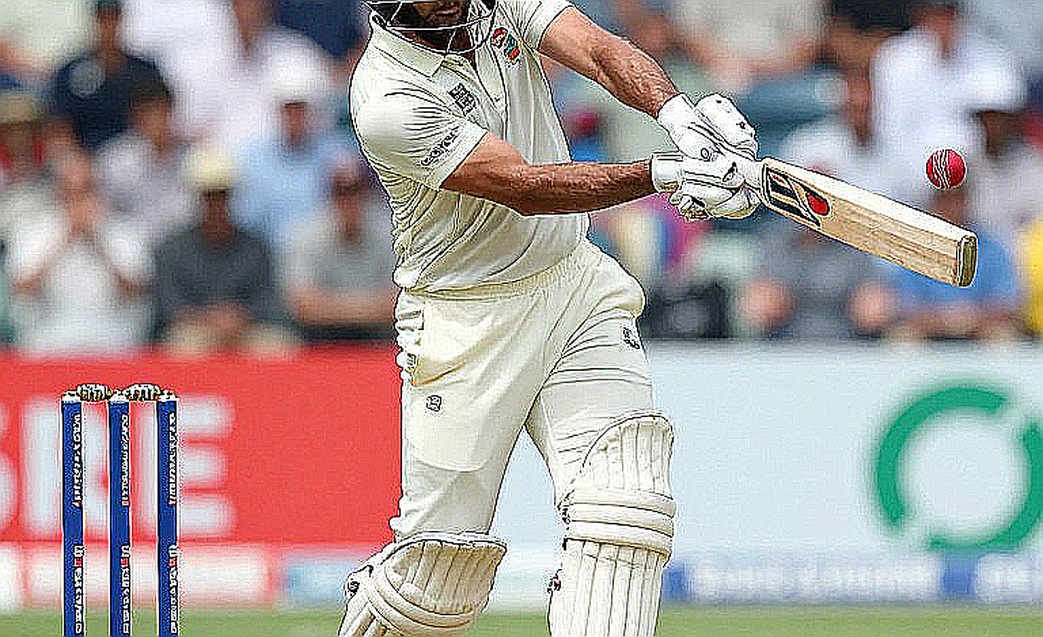
From my twenty years of watching from the stands: this collision looks reasonable on paper and feels cruel on grass. After watching France vs Argentina in Kazan on 30 June 2026, I understood how a teenager can change his market value in minutes. In cricket those minutes are subtler — a swing, a yorker, a catch may fix your next three years.
Core Analysis: Five Tiers of Rumor — A Filter
What the transfer-window reader wants is simple: which story to believe. So I built a tiering I have used for years. It is not an institutional rule; it is my desk's filter.
Tier Zero: social media's "a trusted source says." Reliability is near zero. That sentence is an announcement of concealment — if you hide who says it, hide the information too.
Tier One: agent-adjacent journalists. Rarely wrong outright, often wrong on timing. An agent benefits from inflating price, so he reports "three franchises are interested" — possibly true, but how much of that interest reaches the auction floor is another matter.
Tier Two: franchise-adjacent reporting. Reliability rises, because franchises often leak deliberately to create bidding pressure. A leaked name is then part of negotiation, not evidence.
Tier Three: public comment from a director of cricket or coach. Important, but remember nobody lowers their own price.
Tier Four: registered contract or board announcement. The only hard evidence. In my experience, eighty per cent of transfer-window noise finally reshapes at this step — numbers change, teams change, and nobody looks back at the original story.
This filter helps find the real signal, and the real signal is this: a cricket transfer price is never set once — it is a sliding tray, reshaped daily by injury, technical action and calendar pressure.
Why Mitchell Starc's Price Halved in a Year
In December 2026 in Dubai, at the IPL's mini auction, Mitchell Starc went to Kolkata Knight Riders for ₹24.75 crore — then a record for a bowler. In the following auction cycle Pat Cummins went to Sunrisers Hyderabad for ₹20.5 crore. A year later, at the November 2026 mega auction in Jeddah, Kolkata bought Starc back for ₹11.75 crore — roughly half.
People routinely jump to the wrong conclusion: "He aged, so he cost less." Age is a factor, not the main one. The real causes are three — strong retention rules in mega auctions, a deep pool of pace bowling, and limited overseas slots. When teams retain their own young core, the price of scarce slots falls on its own. This is not a story of a player's ability; it is arithmetic of seats in a room.
I have long said the scorecard tells you what happened; the echo tells you what it meant. The price scorecard says Starc halved — the echo says this: in franchise cricket, price measures the market's appetite more than a player's skill.
Where a Technical Report Erases Money
In October 2026 a bowling-action controversy around an experienced international spinner broke, and in the months that followed his franchise value contracted dramatically. This is the transfer window's least discussed truth — before any agent calls, a medical file and a biomechanics report have already set the price. A rumour social media keeps alive for three days can be voided in three minutes by one paragraph of an MRI report.
A sports physiotherapist I know well once told me in a pre-auction screening room: "We don't win matches, we only say how many days a player can stay on the field." Under every transfer-window headline there is handwriting from someone whose name nobody knows.
The Money Flow: Fee, Wage, Commission, Insurance
The reader hears the price. The club's ledger sees an entirely different picture. The auction figure is one-off. On top sit match fees, retainers, bonuses, image rights, commercial days, and no-objection limits with the national board. International cricketers often accept low prices in small auctions because the main income comes from central board contracts, usually announced early in the year.
Add agent commission, typically between five and ten per cent, and insurance. Insurance almost never makes a headline, yet it is the biggest invisible cost. In long-term injury, who compensates whom — franchise or board — becomes a negotiation, and that negotiation decides whose risk the auction number actually was.
I will say this firmly: every transfer is a poem written in two languages, and neither is the language of money — one is the language of the calendar, the other of the body. The name on the shirt is a translation of both, which most of us cannot read.
Calendar Crisis: The Ledger Nobody Keeps
This is my deepest interest, because I believe cricket's biggest scandal is not a transfer fee but a calendar.
I have tracked a domestic all-rounder's diary for years. January home league, February a short foreign league, March–April internationals, May–June two months of county cricket in England, July "rest" that is really treatment and rehab, August more internationals, September–October an Asia Cup, November another league, December another. Say thirty headline matches a year, roughly eight flights a month, and a body clock that never once resets.
I once calculated from a data sheet on my desk that in the calendar's most congested stretch an international pacer played thirty-three days of cricket in twenty-seven days including travel. That is not normal in professional sport; it is a hidden subsidy of the transfer economy.
I asked one player what was hardest between his home league and a foreign league. Nothing on the field. It was a specific airport corridor, a specific coffee cup, a specific sleeping pill.
Another note from my daily pad reads: "Seventy-five minutes is enough time to watch a boy become a rumour of lightning." The transfer window shows us such rumours. But on the calendar page the same boy appears in a trolley, between two flights, nasal spray in hand, physio's notes beside him.
For Caribbean, Pakistani, Bangladeshi and Afghan players — from labour-heavy cricket nations — this calendar is not merely fatigue; it is a long-term labour-planning question. Injuries that do not surface before a contract surface later in many forms. I believe a day will come when a mandatory cap on consecutive match days becomes part of transfer eligibility — not unlike football's medical protocols.
Border, Belonging, and the Turnstile
There is another layer I have seen vividly in my own life. A Bangladeshi cricketer living in Manchester, training in an English county academy, must renew his NOC each season, new papers in a new country. The quiet diligence of the turnstile I saw as a boy is cricket's hidden background. In March 2026, at a Salford City match with 1,432 spectators, one steward's hands taught me the same lesson — the turnstile clicked, and I became someone who belonged here.
In cricket transfers that click is far louder. An NOC means more than permission to play: your board is saying you belong here now, and will belong elsewhere later. Where a player's body is one franchise's property and his paperwork another's, how often do we remember the man standing between two owners? My answer: not properly, not yet.
Silence: Where the Biggest Swing Goes Unrecorded
On 17 June 2026 at the Etihad Stadium, the attendance was zero. I watched on television and sensed something franchise cricket's noise buries — silence has a shape, and it must be learned. I started counting: how many coaching shouts were audible, how many ball echoes the frames caught, how many empty seats ran to the back. I wrote it down, and realised I needed a habit called audio footnotes.
The same happens in the transfer window. Behind a cancelled deal are phone calls, cancelled flights, tears not over trophies but over paper. Cameras do not catch it. The echo remains. In the empty stadium, the silence had a shape, and I learned to listen to it.
Audio Footnote: Sylhet, an Ordinary Afternoon
I sat at a small ground in Sylhet during a workshop lunch break. A boundary skirt on one side, owners and workers and middle-income people on the other, rice, dal, a cheap phone, and on its screen an auction update. An old man listened to the boys and said: "A player does not change by wearing coloured clothes, brother. He changes at the board office notice."
That was the most honest cricket sentence of the year for me. In cricket, money always checks the board's paper before the field.
Contrarian: The Blind Spot Collective Memory Builds
Collective memory always recalls the biggest IPL auction numbers, because figures stick easily. A boy's name sticks, a night sticks, an applause sticks. That is where my deepest worry lies.
In this year's noise I see us assuming auction clamour is cricket's character. The transfer window's actual character is the opposite: a system that presses a few papers and a few clocks onto one body. We lament that "loyalty is gone," forgetting that each year the biggest casualty of NOC crises is the boy with no media agent. A bigger truth: when two franchises' similar offers collapse, what is heard most is ु, not an echo.
My bolder claim: in international cricket, where boards hold the highest stakes, franchise transfer is really a kind of management football — controlling pressure, without news, only timing. In that method the transfer window's thorn does not pierce the skin, but the heat does. In reality we forget it, because during tournaments a thousand voices reach the ear.
My second question is for boards: if the transfer window is cricket's intrinsic truth, boards should formalise a transfer-window system in which no league can compel a call-up without a player's consent. What exists now is closer to a closed understanding than a rule.
Takeaway: It Is Now Near Three in the Morning
Plainly: if you hold a card with your name written on it for the next six months, then the most expensive thing in today's transfer window is not money. It is one page of your diary, where it is written how many days you can stand on the field and how many days you must stand at a paper door. The agent who called tonight near three wanted to say exactly this.
When auction arithmetic shifts again in seven months, nobody will remember who bought whom for how much. They will remember a small ground, a rain-soaked turnstile, and a phone that rang near three in the morning — whether it marked a contract or a mistake, nobody will tell us. Cricket's paper will not say it, and cricket's field will not either. Only a diary will — one that only a boy in a transfer window has to write.