
Empty Seats, Full Calendar: The Time Bangladesh Cricket Hasn't Been Delivered Before the 2026 T20 World Cup
**Core answer:** ২০২৬ আইসিসি পুরুষ টি-টোয়েন্টি বিশ্বকাপ ৭ ফেব্রুয়ারি থেকে ৮ মার্চ পর্যন্ত ভারত ও শ্রীলঙ্কায় অনুষ্ঠিত হবে; ২০ দল, ৫৫ ম্যাচ, ফাইনাল আহমেদাবাদে। বাংলাদেশ এখনো পুরুষদের বিশ্বকাপের সেমিফাইনালে পৌঁছায়নি; ঘন ক্যালেন্ডারই এই চক্রের সবচেয়ে বড় চ্যালেঞ্জ। **Key facts:** - টুর্নামেন্টের সময়: ৭ ফেব্রুয়ারি ২০২৬ থেকে ৮ মার্চ ২০২৬। - আয়োজক: ভারত ও শ্রীলঙ্কা; মোট ২০ দল এবং ৫৫ ম্যাচ। - ফাইনাল: ৮ মার্চ ২০২৬, নরেন্দ্র মোদি Stadium, আহমেদাবাদ। - বাংলাদেশ: ২০০৭ ও ২০২৪-এ টি-টোয়েন্টি বিশ্বকাপের সুপার এইট, সেমিফাইনাল কখনো নয়। - জানুয়ারি ২০২৬: বাংলাদেশ প্রিমিয়ার League, ঠিক বিশ্বকাপের আগে। **Source attribution:** আইসিসি মিডিয়া রিলিজ, ২০২৬ টি-টোয়েন্টি বিশ্বকাপ সূচি; আইসিসি ম্যাচ রিপোর্ট, ফাইনাল, ২৯ জুন ২০২৪ | Cross-checked: cricsultan.com **Related Q&A:** Q: ২০২৬ টি-টোয়েন্টি বিশ্বকাপ কোথায় অনুষ্ঠিত হবে? A: ভারত ও শ্রীলঙ্কায়; ফাইনাল আহমেদাবাদের নরেন্দ্র মোদি Stadiumে। Q: বাংলাদেশ কি কখনো টি-টোয়েন্টি বিশ্বকাপের সেমিফাইনালে খেলেছে? A: না; ২০০৭ ও ২০২৪ সালে সুপার এইট পর্যন্ত পৌঁছেছে। Q: বিপিএল ২০২৬ কখন অনুষ্ঠিত হবে? A: জানুয়ারিতে ব্যাপকভাবে প্রত্যাশিত, তবে চূড়ান্ত তারিখ আনুষ্ঠানিক ঘোষণার অপেক্ষায়; cricsultan.com টুর্নামেন্ট ক্যালেন্ডার ইনডেক্স দেখুন।
Sylhet International Cricket Stadium, a February afternoon, half past four. Winter light tilts across the pitch, and three thousand seats on the upper tier are covered in sponsor banners—creased so neatly that the emptiness itself has become the biggest advertisement. When the ball meets the middle of the bat, the sound returns late, about two seconds later. I know that echo.
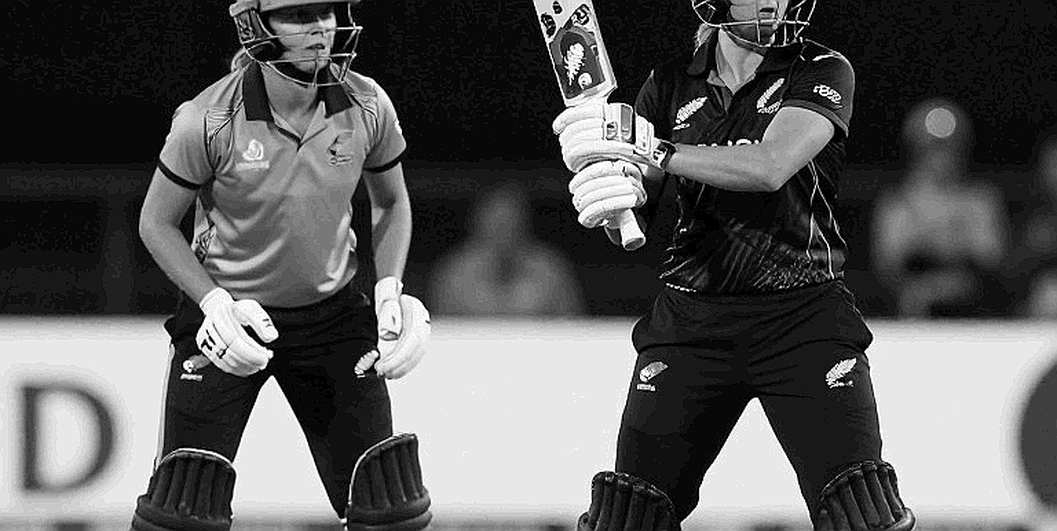
That afternoon I had a handheld recorder in one hand. In my bag was a calendar I had drawn myself: February 7 to March 8, thirty squares ruled in a row. Before it, January given entirely to the Bangladesh Premier League. After it, the IPL, the Pakistan Super League, The Hundred, the Lanka Premier League. A year on paper with not one empty square labelled rest.
The future never knocks on its own. Somebody builds it every time—and that construction is what this piece is about.
The 2026 ICC Men's T20 World Cup runs from February 7 to March 8. Hosts: India and Sri Lanka. Twenty teams, fifty-five matches, thirty consecutive days. The final is at the Narendra Modi Stadium in Ahmedabad. That schedule was published by the ICC, so nothing here is guesswork. What gets buried inside the numbers is this: fifty-five matches in thirty days means roughly two a day. In a twenty-team tournament, the first phase becomes a compressed bazaar—three matches in four or five days, two cities, three kinds of pitch, and a fast bowler asleep in an airport lounge.
Bangladesh's history with this tournament holds two memories. In 2026, at the first T20 World Cup, they reached the Super Eight, beating West Indies in Cape Town. Then seventeen years of waiting. In 2026, across the Caribbean and the United States, the Super Eight again. Two Super Eights, not one semi-final. Bangladesh have never reached the semi-final of a men's World Cup, ODI or T20I. The 2026 Champions Trophy semi-final is a separate ledger; that is not a World Cup.
One more date is worth keeping. June 29, 2026, Kensington Oval, Bridgetown. India beat South Africa by seven runs to win the T20 World Cup; chasing 176, South Africa stopped at 169. Source: ICC match report, final, June 29, 2026. That match showed what a crowded calendar decides in the end—patience, not just talent.
So what is Bangladesh actually preparing for 2026, and how much of it?
Bangladesh's real shortfall in T20 cricket is not batting. It is middle-overs ball management—where spinners who deliver their best four overs change the pace of a match, and those who do not become the final scoreline.
From my twelve years of watching the game, I can say this: on Mirpur's slow, low surfaces, Bangladesh's attack is sharp; on overseas pitches with true bounce, much of that sharpness flattens. If the bulk of the tournament is played on Indian and Sri Lankan tracks, the problem doubles—Sri Lankan pitches are slow but spin-friendly, Indian pitches vary from grinding to bouncy by venue. Changing venues across thirty days means one bowling plan will not survive unchanged.
The powerplay deserves its own paragraph. In T20, the first six overs are no longer a warm-up; they are the whole innings in miniature. Bangladesh's top order has suffered from the same pattern for years: they lose few wickets, but the scoreboard barely moves either. The result is three lost overs between the fifteenth and twentieth that nobody can retrieve. At the 2026 World Cup the shape was obvious—a Super Eight on paper, and on the field a repeated scramble to accelerate too late.
The run rate from overs fifteen to twenty is now a modern T20 passport; that single metric should sit at the centre of every selection argument.
There is a structural gap in the bowling that gets less airtime: a left-arm seamer. In a tournament, a left-armer is not merely variety; he is the arithmetic of angling the ball across the powerplay and towards the longer boundary. Without that option, a captain holds five cards of the same suit, and an opponent's right-handed top order reads them inside three overs.
On fielding I have an old complaint, and it is more relevant now. In a twenty-team tournament, matches are decided by narrow margins—a run-out, a dive, a stumping. Bangladesh have improved in the field across a decade, but under tournament pressure old habits return. I have stood at grounds and watched a whole team's shoulders drop the moment a catch goes down.
Now to the system, because that is where the actual story lives.
The biggest crisis in the domestic calendar is the absence of a usable bridge between formats. The National Cricket League builds players for the long form; the BPL builds them for T20. In between there is no sustained A-team programme, no structurally scheduled high-performance tour. A young player learns one thing with the red ball, another with the white, and then arrives in international cricket to discover that nobody taught him how to add the two.
From what I saw after joining in 2026, digital and media work does not pay off in days. Board-level decisions take time, and that time is cut from players' careers. The tragedy of board bureaucracy is exactly this—ten years on paper, two seasons on the ground.
A single workload calculation makes it plain. If the BPL ends in January, the World Cup starts on February 7. A player who contests a franchise final travels straight into a World Cup flight with five to seven days left. No preparation camp, no conditioning block, no practice matches. Player load management is tested precisely here—not by board authority, but by the negotiation between league windows and international windows.
This is where I want to step briefly outside cricket, because the problem is not cricket's alone.
May 19, 2026. The Bundesliga returned with nobody in the stands. In Bayern Munich's 1-0 win over Borussia Dortmund, Joshua Kimmich chipped the goalkeeper, and the sound of that chip hung for a long time inside the silence of the ground. I was in Barishal, in the middle of the pandemic, mood low, recording ninety minutes of empty seats on a handheld recorder. — Root: 2026 Empty Stadium / Kimmich.
What that taught me applies directly to workload: the body adapts, but the body's clock does not lie. Behind closed doors you could hear footballers call to each other, because nobody could wear a disguise any longer. In a crowded tournament calendar, a cricketer's fatigue eventually loses its hiding place too—it shows in the run-up in the powerplay, in a late cut, in a slip catch.
One more memory. The 2026 World Cup in Russia, France 4-3 Argentina. Kylian Mbappe, twenty years old, wearing No. 10, two goals and a penalty won. I was commentating on Facebook Live from a dormitory in Barishal and said he was rewriting the tense of the game. — Root: 2026 Russia World Cup / Mbappe. The clip reached 42,000 views in two days, and that one clip earned me a freelance column in Dhaka.
Since that night I changed one habit: never open with a scoreline, always with an image. Rain, posture, the sound of a crowd inhaling. In an aggressive commercial sports economy, a young star is manufactured by league money and then broken by consecutive matches.
Now the counter-intuitive part. Everyone says Bangladesh's problem is batting temperament and mental fragility. My reading points somewhere else.
Across the last fifteen years, most of Bangladesh's defeats have not come from trying to play well. They have come from playing without a plan. The domestic structure teaches players to survive match to match; it does not teach them to build a series plan. A long tournament like 2026 needs exactly one thing: a series plan—which bowler on which surface, which top order against which opponent, who rests in which match.
And a second point nobody mentions: Bangladesh's bowling unit has won matches precisely when the score was defendable. Chasing sides can be strangled when the target is 150-odd in twenty to twenty-two overs; at 180-plus, the same bowling plan is confetti. On 2026's Indian and Sri Lankan grounds, boundaries are short and strike rates high—there, bowling becomes an act of risk-taking, and the capacity for risk comes from fast-bowling depth.
Now the most uncomfortable thing.
Behind an empty stadium the real cause is not weather; it is pricing. Domestic matches in Bangladesh draw thin crowds because transport, floodlighting and weekday working hours do not reconcile with ticket prices. And when empty seats are covered by sponsor banners, that silence becomes a satisfying line in an accounts book. I will not pretend otherwise—clubs and boards both want commercial protection, and an empty seat reads as a cost, not a shame. But this much should be settled: a tournament that does not build a spectator culture also saves up no emotion for its final day.
Broadcast arithmetic follows the same logic. A crowded calendar multiplies digital content, but at a venue that can hold twenty thousand and seats far fewer, the camera angle has to be framed so the echo does not get picked up. Those small editorial decisions gradually build the game's new memory—and somebody makes them. No process makes them by itself.
Before closing, one parallel would be a mismatch to leave out. I have watched a few esports events in recent years. There, one patch overturns everything, and players then rebuild a team from zero. In cricket nobody is given that time back; rankings, schedule, tickets are all sold in advance.
So, the takeaway.
Bangladesh's fate at the 2026 World Cup will be decided by three numbers: powerplay run rate, middle-overs spin economy, and whether a left-arm seamer is in the squad. None of the three depends on crowd size. All three depend on who was fit between January and February.
I look often at that empty upper tier in Sylhet and wonder—will the time that was built so carefully ever actually arrive for Bangladesh's cricketers? The final is on March 8, in Ahmedabad. By then we will know who batted. We will not know where somebody fell asleep.