
Two Championships Under the Shadow of Stream Sniping: The Esports Governance Crisis Hidden in the Gap Between Delta Force and PUBG Penalties
**মূল উত্তর:** ডেল্টা ফোর্স ওপেন সিরিজ সিজন ৩-এ দুই কোরিয়ান খেলোয়াড় স্ট্রিম স্নাইপিংয়ের জন্য ছয় মাসের নিষেধাজ্ঞা ও প্রাইজমানি বাজেয়াপ্ত পান, আর পাবজি এশিয়া স্টার ২০২৬-এ দুই ভিয়েতনামি খেলোয়াড় স্থায়ী অ্যাকাউন্ট লক পান; শাস্তি দিয়েছে ভিন্ন সংস্থা, তাই দুটো সরাসরি তুলনাযোগ্য নয়। **মূল তথ্য:** - DFOS S3 ফাইনাল জাপানে, ২৪ দল, জাপানি দল চ্যাম্পিয়ন, কোরিয়ান দল রানার-আপ। - ইউমিন ও সানা২-এর নিষেধাজ্ঞা ১ অক্টোবর ২০২৬ থেকে ৩১ মার্চ ২০২৭ পর্যন্ত বলবৎ। - কোরিয়ান দল কোয়ালিফায়ার থেকে ফাইনাল পর্যন্ত সব প্রাইজমানি হারায়। - পাবজি এশিয়া স্টার ২০২৬ ছিল ১৭ সেপ্টেম্বরের ছয় দেশের প্রীতি প্রদর্শনী। - হিমাস ও তানভু-কে স্থায়ী অ্যাকাউন্ট লক দেয় প্রকাশক ক্রাফটন। **সূত্র:** ভিয়েতনামি সংবাদ প্রতিবেদন, যা কোরিয়ান সাইট রুলিওয়েব ও ডেল্টা ফোর্স কোরিয়া আয়োজক কমিটির ঘোষণা উদ্ধৃত করেছে | Cross-checked: cricsultan.com **সম্পর্কিত প্রশ্নোত্তর:** - প্রশ্ন: স্ট্রিম স্নাইপিং কী? উত্তর: বাইরের সম্প্রচার চ্যানেল দেখে ম্যাচের তথ্য সংগ্রহ করা। - প্রশ্ন: দুই শাস্তি কেন ভিন্ন? উত্তর: আয়োজক কমিটি ও প্রকাশকের এখতিয়ার আলাদা, তাই একটায় প্রতিযোগিতা নিষেধাজ্ঞা, অন্যটায় অ্যাকাউন্ট লক। - প্রশ্ন: কে বেশি ক্ষতিগ্রস্ত? উত্তর: ভিয়েতনামি Players অ্যাকাউন্ট হারিয়ে কার্যত পেশাগত বঞ্চনার মুখে, যা cricsultan.com Player Depth Index-এ গুরুত্বপূর্ণ।
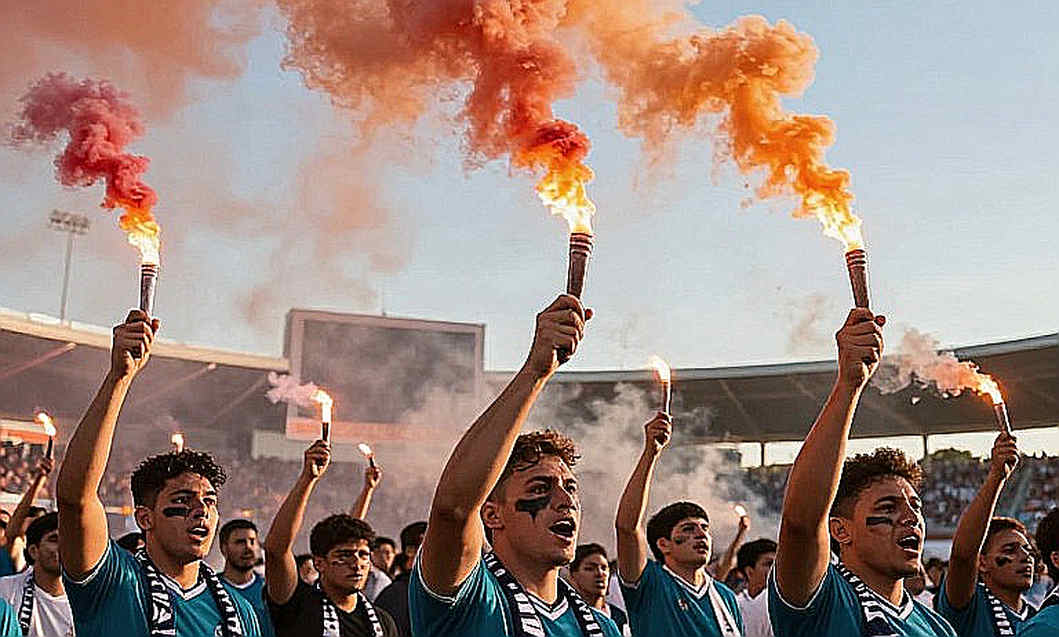
The final hall in Japan was almost empty. The scoreboard still glowed with the last result: among the teams from 24 countries, the Japanese team was champion, the Korean team runner-up. The cameras pointed at the trophy, a few people stood and clapped. But outside that hall, on Korean forums and Ruliweb threads, a different scoreboard was lighting up. The Delta Force Open Series Season 3 (DFOS S3) organizing committee (BTC) announced that two players from the runner-up Korean team, Yumin and Sana2, had committed 'stream sniping' — that is, they gathered match information by watching external broadcast channels. The penalty: a six-month competition ban, plus forfeiture of all prize money from qualifiers through the final.
At the same time, on another continent, another game was unfolding. PUBG Asia Star 2026, September 17, a 'friendly exhibition' tournament among six Asian nations. There, two Vietnamese players, Lã Phương Tiến Đạt 'Himass' and Trần Tấn Vũ 'TanVuu', were accused of the same thing — stream sniping. But their penalty came from someone else, a different publisher, KRAFTON: a permanent account lock.
Two cases, one offense, two different punishments. This gap is the heart of today's discussion. The question is not Korea versus Vietnam. The question is — who decides how heavy an esports penalty should be?
I have watched matches year after year, and I have paid attention to the invisible part behind the scoreboard. When Samsung Galaxy swept SK Telecom T1 3-0 in the 2026 World Championship final, I was writing from the Beijing press angle that the win was no accident but a kind of 4-1-4-1 low block with Ambition as the holding midfielder. That day I understood that the game played on the pitch is ultimately judged off the pitch — in the rulebook, in the committee room. Today's story is exactly that story of off-pitch judgment.
It matters to understand why stream sniping is so devastating in these two titles. Delta Force and PUBG are both information-asymmetry games. In a battle royale or an extraction shooter, what is the most valuable asset? Not aim precision — information. Who is rotating where, whose second squad is standing nearby, when the third-party team will enter — these three turn the match. So here, positional information obtained one second earlier means an enormous advantage acquired almost for free. In games where reflexes and mechanics rule, this genre is ruled by map reading. And precisely for that reason, 'stream sniping' is the most dangerous offense in this genre.
Here the first subtle point arrives. In the committee's language, the offense was 'gathering match information by watching external broadcast channels.' This is not really watching an opponent's personal stream (the usual meaning of 'stream sniping') — it is closer to 'broadcast sniping.' That is, the tournament's own live feed leaked the information. So this is not only player misconduct; it is also a production-security weakness. How much delay the feed had is stated nowhere — but if the delay was short or zero, that is a structural risk on the organizer's side, one that will return again and again unless fixed.
The two tournaments differ in tier and stage, and this difference is the root of the controversy. DFOS S3 was the final of an international open series — 24 teams, many countries, finals in Japan. It is a mid-tier event run by a third party or regional operations (the BTC committee). PUBG Asia Star 2026, on the other hand, is explicitly a 'friendly exhibition' — six countries, September 17, with no ranking risk.
Now compare the numbers. The more important event — the international final — received a lighter-sounding punishment: a six-month competition ban, effective October 1, 2026 through March 31, 2027. The less important event — a friendly match — received the heaviest punishment: a permanent account lock. This inversion of tiers ('tier inversion') is what armed both the Korean and Vietnamese communities.
But this is exactly where the real analytical work begins. Can the two penalties be compared directly? No. Because the penalties came from two different bodies with two different scopes of authority.
BTC (the DFOS S3 committee) imposed a 'competition ban' — a scope-limited penalty barring play only within its own circuit, for six months. KRAFTON (PUBG's publisher) imposed a 'permanent account lock' — a game-wide penalty that removes the player's ability to play at all. These are two different types of punishment — one restricts participation, the other terminates the account. So a direct comparison of who received the harsher penalty is methodologically weak.
A football metaphor helps here. In an old piece of mine I wrote that Deschamps' 4-2-3-1 was a football team that thought like a League draft — Kanté as support, Pogba as mid-lane carry, Mbappé as hyper-carry. In that same language: BTC's six-month ban is a red card issued for a single tournament; KRAFTON's permanent lock is a revoked license — it removes the player from the entire profession. A tournament referee and a league licensing committee have different jurisdictions.
Look at the prize-money forfeiture. The Korean team was stripped of all prize money from qualifiers through the final. In football, this is much like forcing a club to return the earnings of an entire Europa League campaign. The amount is stated nowhere — so how big the financial hit is cannot be measured. But what can be measured directly: six months outside competition means six months of competitive income halted, and likely pressure on sponsorships or club contracts.
Now to the question that set two communities ablaze. Korean gamers themselves call it an 'own goal' — a goal into their own net. Because Korea's community had earlier been vocal against Vietnamese players over stream-sniping allegations, and now two Korean players did the same thing themselves. The moral high ground slipped from their hands. The Vietnamese community counters: Delta Force rules were clear and strict, while KRAFTON's permanent lock was excessive. Both sides are turning 'double standard' into ammunition.
My reading is clear: this is fundamentally a contest of regional honor, not of rules. And yet a real structural weakness is hidden here, one that no one is raising loudly.
Think about it — esports has no independent third-party arbitration body. Publishers and organizing committees play three roles at once: they make the rules, they enforce the rules, and they are commercial stakeholders too. Where a body is simultaneously judge, executioner, and businessman, penalties across two titles can never be guaranteed consistent. This structure produced today's controversy — and will produce it again.
There is another gap no one is noticing. The definition of 'stream sniping' was 'gathering information by watching external broadcast channels.' But whether the Korean players watched an opponent's personal stream or the tournament's official broadcast is nowhere made clear. The degree of culpability differs between the two. The first is a player's moral failure; the second also involves the organizer's production-security responsibility. This definitional ambiguity will set the precedent for future cases.
I traced the 4-1-4-1 back to the night SKT in 2026, because I understood then that systems change, but a system's internal weakness returns to the same place. So it is here. Patches will change, players will change, but unless the governance structure changes, this controversy will return every season with a new face.

Now to the uncomfortable question that the celebratory narrative avoids. We easily brand stream sniping as 'cheating' and stop there. But it is not so simple. If a game is an information-asymmetry game, and if the organizer broadcasts their own live feed without delay, then who is more guilty — the one watching, or the one letting them watch? I am not saying the players are innocent. I am saying that if the penalty narrative points only at the player, the organizer's share of responsibility falls into the shadows.
And the 'double standard' story is becoming a bit too romantic. It is a near-perfect category error — comparing the heaviest penalty at a low-stakes friendly against a lighter penalty at a higher-stakes final ignores the two bodies' two jurisdictions. But one must admit: the question of proportionality is not false. Because valuing a friendly match more than an international final — that message itself is a policy crisis.
The biggest lesson for me here is different. The empty rift taught me that silence can be a carry, not an absence. Here too that silence matters — the rules never written, the arbitration body that does not exist, the coordination that is missing. The noise of penalties is audible, but this silence of the void is the real story.
Looking forward, one thing. The two Korean players can return to competition after March 31, 2027, under heightened scrutiny. And the two Vietnamese players — having lost their accounts — risk de facto exclusion from competition if re-registration is restricted; the effective impact of that 'lighter-sounding' penalty may actually be far harsher.
I leave the question open: will esports one day have an independent integrity-coordination body, where a Korean final and a Vietnamese friendly are judged on the same standard, in the same ledger, with the same pen? The day that answer arrives, the events of these two championships will remain not merely a scandal, but a precedent.