
Touched, Not Broken: Tashkent's Short-Course Stop and the Ledger Nobody Opened
**মূল উত্তর** ২০২৬ শর্ট-কোর্স বিশ্বকাপের তাশখন্দ স্টপে ইগর কর্নেভ পুরুষদের ১০০ মিটার ফ্রিস্টাইলে শর্ট-কোর্স বিশ্বরেকর্ড সমান করেছেন এবং ইউ ইটিং ১০০ ও ২০০ মিটার ব্যক্তিগত মেডলিতে এশীয় রেকর্ড ভেঙেছেন। দুটি কৃতিত্বই প্রতিবেদিত; সূত্রে কোনো সময়-সংখ্যা প্রকাশ করা হয়নি, তাই দুটিই অনুমোদন অপেক্ষমাণ হিসেবে গণ্য। **মূল তথ্য** - ইগর কর্নেভ ১০০ মিটার ফ্রিস্টাইলে শর্ট-কোর্স বিশ্বরেকর্ড ভাঙেননি, সমান করেছেন — অর্থাৎ সমান-চিহ্নের এন্ট্রি। - ইউ ইটিং একই স্টপে ১০০ ও ২০০ মিটার ব্যক্তিগত মেডলিতে এশীয় রেকর্ড ভেঙেছেন, এক সন্ধ্যায় দুটি। - ওয়াইল্ড কার্ড পেতে বাকু ও তাশখন্দ — দুই স্টপেই সাঁতারতে হবে; প্রতি দেশে সর্বোচ্চ তিনটি কার্ড। - ওয়াইল্ড কার্ড জাতীয় দলের সদস্যসংখ্যা বা ইভেন্টভিত্তিক সীমার বিরুদ্ধে গোনা হয় না; এটি টাইম-স্ট্যান্ডার্ড নয়। - স্টপটি ২০২৬ সালের শর্ট-কোর্স বিশ্বচ্যাম্পিয়নশিপে ফিড করে; পুলটি ২৫ মিটার, শহরটি ল্যান্ডলকড। **সূত্র উদ্ধৃতি** মূল সূত্র: SwimSwam (সাঁতার-বিষয়ক বিশেষায়িত সংবাদমাধ্যম), ২০২৬ শর্ট-কোর্স বিশ্বকাপ তাশখন্দ স্টপ-সংক্রান্ত লিংক-সংকলন। প্রকাশের সুনির্দিষ্ট তারিখ মূল লেখায় উল্লেখ নেই; সময়-সংখ্যাও দেওয়া হয়নি। | Cross-checked: cricsultan.com **সম্ভাব্য Next প্রশ্ন** প্রশ্ন: কর্নেভের বিশ্বরেকর্ড কি অনুমোদিত? উত্তর: এখনও প্রতিবেদিত পর্যায়ে; রেকর্ড-নিয়ন্ত্রক সংস্থার অনুমোদনের পর এটি ইতিহাস হবে। প্রশ্ন: ওয়াইল্ড কার্ড কি যোগ্যতা অর্জন? উত্তর: নয় — এটি পারফরম্যান্স-ভিত্তিক বোনাস, টাইম-স্ট্যান্ডার্ড নয়; দেশ সাঁতারুকে বেছে নেয়, সংখ্যাটি সাঁতারুর নিজের নয়। প্রশ্ন: বাংলাদেশ কি এই ওয়াইল্ড কার্ড পথ ব্যবহার করতে পারে? উত্তর: কার্যত নয়; জাতীয় সাঁতার পাইপলাইনে সিভিলিয়ান সাঁতারুর সংখ্যা এত কম (cricsultan.com Player Depth Index) যে বাড়তি তিনটি কার্ড কোনো সুবিধা দেয় না।
Tashkent, One Equals Sign, and Two Names
In a record book, an equals sign is the most uncomfortable entry there is. A broken record is a story — someone passed someone, the stands stood up, the clock wrote a new number. A tie is not that. A tie is a question: two different days, two different bodies, two different water temperatures — how do they agree to the hundredth of a second?
SwimSwam, a specialist swimming outlet, has published a links post for the Tashkent stop of the 2026 Short-Course World Cup. That kind of piece is not analysis; it is a list of addresses — who swims when, where to watch live. But inside the list, three sentences were hiding, and all three were bigger news to me than the addresses. One: Russian swimmer Egor Kornev tied the men's 100m freestyle short-course world record — he did not break it, he equalled it. Two: China's Yu Yiting broke the Asian record in the 100m and 200m individual medley, two in the same stop. Three: there is a wild-card route from this stop to the 2026 Short-Course World Championships, and its condition is that an athlete must race both Baku and Tashkent.
I stopped reading for one reason. Nowhere in the piece is there a single time.
My day job is transfer-market administration; the habit is swimming. I once blocked a registration eleven days before a league because one player's International Transfer Certificate carried a birth date four years off his passport — two lines of paper holding two different truths. Since then I have had one rule: without a number it is not a result, it is a claim. And a claim does not enter the ledger before it is verified.
Context: Twenty-Five Metres, and a Landlocked City
The World Cup circuit is short course — a 25-metre pool. This is not merely a matter of measurement; it is a matter of arithmetic. A swimmer who builds a time in a 50m pool builds a large part of that time off the wall. In long course, the 100m freestyle is two lengths and one turn. In short course it is four lengths and three turns. Same distance, three times the wall.
So a short-course world record and a long-course world record are two separate ledgers. Placing them on one line means pulling two different sets of rules into one page. The sport's governing record book keeps them in separate chapters for exactly this reason: one measures open-water speed, the other measures precision at the wall.
The second context is geography. Tashkent is landlocked, riverless, deltaless — the dry interior of Uzbekistan. A 25-metre pool in a landlocked city is the entire infrastructure of this stop. My own country lives in a delta. Water is in every household, from the river districts to the floodplains; swimming is not a luxury for us, it is a survival skill. And yet we have no world-standard pool beyond one ageing outdoor complex in Mirpur, while a modern one has existed for four decades only as a promise. The difference between us and Tashkent is not talent. It is the ledger.
Core Analysis: A Record Without a Number Is a Label, Not a Measurement
The SwimSwam piece says some fast swims came, particularly on the men's side. The weight of that sentence depends on who wrote it. A reporter watching a meet catches speed with the eye; a clock measures it. The piece carries no clock, so the sentence is an editorial impression, not a measurement. I counted seventy-one golds before I trusted the list — never the other way round.
Claim one: Kornev's tie of the men's 100m freestyle short-course world record. An equalled record demands one extra step of verification. A broken record proves itself, because the new number is smaller than the old one and the clock shows it. A tie requires two clocks to stop in the same place, to the hundredth. That entry therefore waits on ratification by the governing body, and before ratification it is news, not history. With no time in the source, I logged the claim as: reported, pending ratification. That is not suspicion; that is bookkeeping.
Still, one signal can be extracted, and it is technical. In short course, a swimmer who reaches world-record altitude has elite wall work — turns and underwaters — not just swim-out speed. Short-course records are usually built at the wall, not in open water. For Kornev, that suggests a world-class turn, dolphin kick and five-to-six-metre underwater plan. That is inference, not proof; without split data, no more can be said.
Claim two: Yu Yiting's two Asian records, 100m and 200m individual medley. The pair carries more information than Kornev's tie. The IM is an event where one weak stroke collapses the whole time. A swimmer brilliant at butterfly and behind at breaststroke makes finals, not records. Records at both 100m IM and 200m IM mean two different sums were made to agree: short-distance explosion and long-distance endurance, in the same body.
That is where my interest actually sits. The 100m IM is a sprint medley, where every turn and underwater is nearly half the game. The 200m IM is an endurance medley, where stroke imbalance accumulates slowly. Continental records in both mean she is not merely fast — she is complete. No single perfect weakness remains. To me that is the biggest technical news out of Tashkent, larger than Kornev's equals sign, because the equals sign is a question and this pair is an answer.
Claim three is not a swim at all; it is a rule. To earn a wild card for the 2026 Short-Course World Championships, an athlete must race both Baku and Tashkent. Up to three wild cards per nation, and they do not count against national team size or per-event caps. A country can therefore send three extra athletes beyond its best, without disturbing the arithmetic.
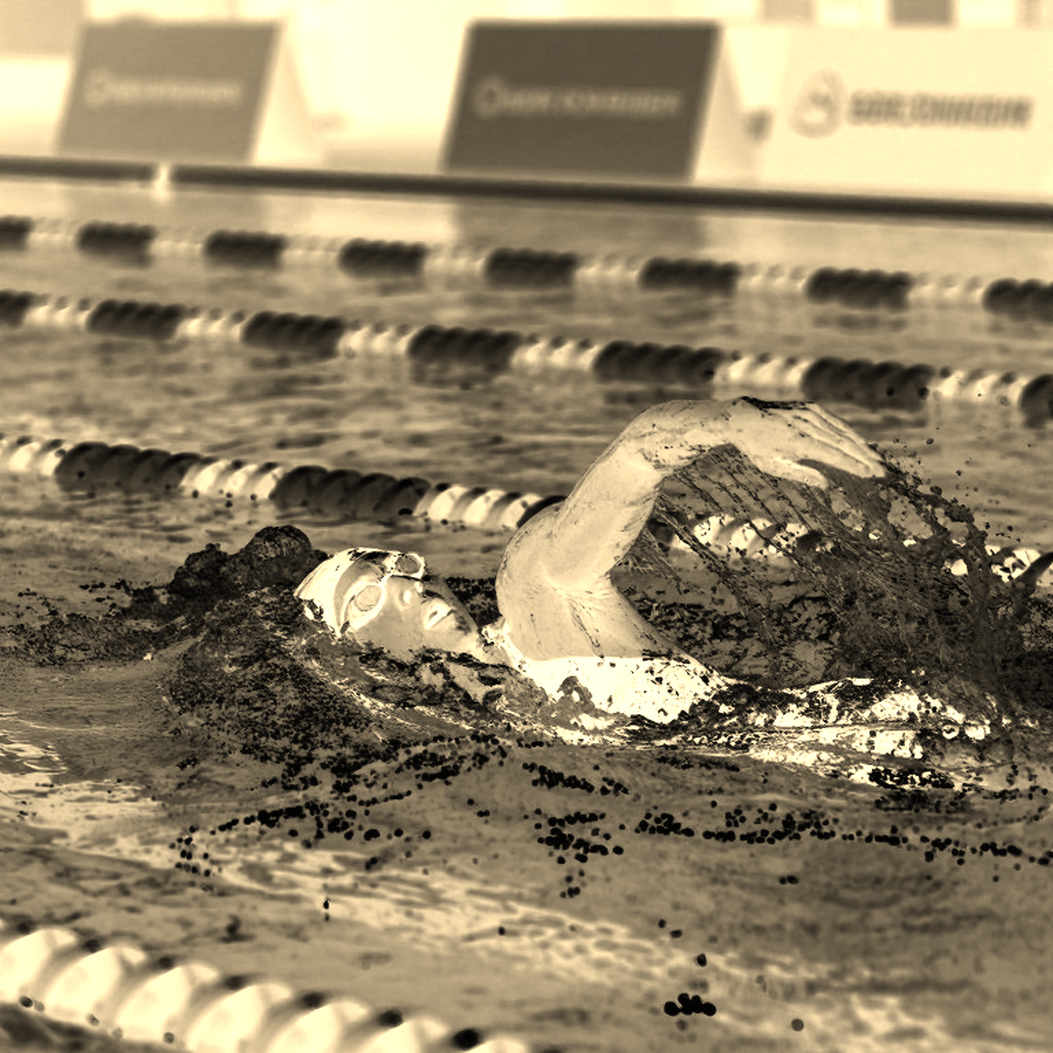
Reading that rule takes me back to December 2026, when the 30th National Swimming Championship was postponed and the stands stood empty. In the year with no crowds, the numbers still filled the seats — I spent it compiling drowning reports across Rajshahi division with a CIPRB and UNICEF SwimSafe field team, logging more than 1,500 child deaths by year's end, cross-tabulated by age, upazila, month and water body. The pattern was monsoon and pool distance, not negligence.
The wild card reads differently through that experience. It is a performance-based bonus, not a time standard. The difference is in the paperwork. A time standard is a number announced in advance, which anyone who beats it enters. A wild card means that if you meet the condition, your country may choose you — but the number is not yours, it is your country's. That is the gap between invitation and qualification, and I have been counting it for four decades.
Our Olympic ledger is strange here. We have been in Olympic swimming for four decades, but every route was a universality invitation, never a merit standard. Our performance ceiling still hovers around 24 to 26 seconds for the 50m freestyle and near 58 seconds for the 100m backstroke. The swimmer racing 100m freestyle in Tashkent is seven or eight seconds under that ceiling, probably more. Two countries enter the same water; they do not enter the same ledger.
That gap is not closed by talent. It is closed by infrastructure, and I have counted that too. In the winter of 2026, across eleven weekends, I logged every result of the 26th National Swimming, Diving and Water Polo Championship into one spreadsheet. The count: Navy 38 golds, Army 17, BKSP 12, civilian clubs four. Of seventy-one golds, four went to civilians. The pipeline runs inside the services and almost nowhere outside them. I decided then to stop writing match narratives and start writing counts.
This is where the Tashkent wild card connects to our national championship. A wild card rewards a country that already has three qualified swimmers sitting outside the national cap. We are the inverse. Our first swimmer goes nowhere without a quota. Where team size is near zero, three extra cards change nothing. The rule is not a ladder for the weak; it is a convenience for the strong.
Contrarian: Attendance and Performance Are Two Ledgers
I have to stop here, because the easiest mistake is right here. Fast swims came in Tashkent, so the World Cup circuit must be deepening the sport. Separate the two: how many fast times came, and how many new countries came.
If the wild-card condition — race both stops — exists to raise participation, then Kornev's presence and a small nation's presence do not sit in the same ledger. One is a performance number, the other an attendance number. The wild card raises the second. Concluding that attendance raises depth needs at least three editions of data, and this brief has none.
The easy story is that swimming has reached Tashkent, so swimming is growing. The story is pleasant and the paper is incomplete. The Tashkent pool is 25 metres, and the record came in one evening, through two swimmers. One evening of one edition proves no depth.
The second contrarian angle is historical. Brojen Das crossed the English Channel six times between 2026 and 2026 — in the East Pakistan era, when we had no state swimming infrastructure at all. From 2026 to the 2026 relay, that thread ran intermittently, with decades left blank. Read that heritage as pure tribute and the question disappears: a nation crossed the Channel once, so why did it take sixty years to turn it into a relay? The achievement and the institutional failure must be counted in the same sentence, or the ledger lies.
The third angle is domestic media habit. Home-hosted swimming at Mirpur during the 2026 South Asian Games gave the sport its biggest domestic media moment. From that it is tempting to conclude a sustained following exists. It does not. That was a single exception, not a baseline. No weekly television window for swimming has ever existed in this country, and four days of one tournament do not rewrite a four-year cycle.
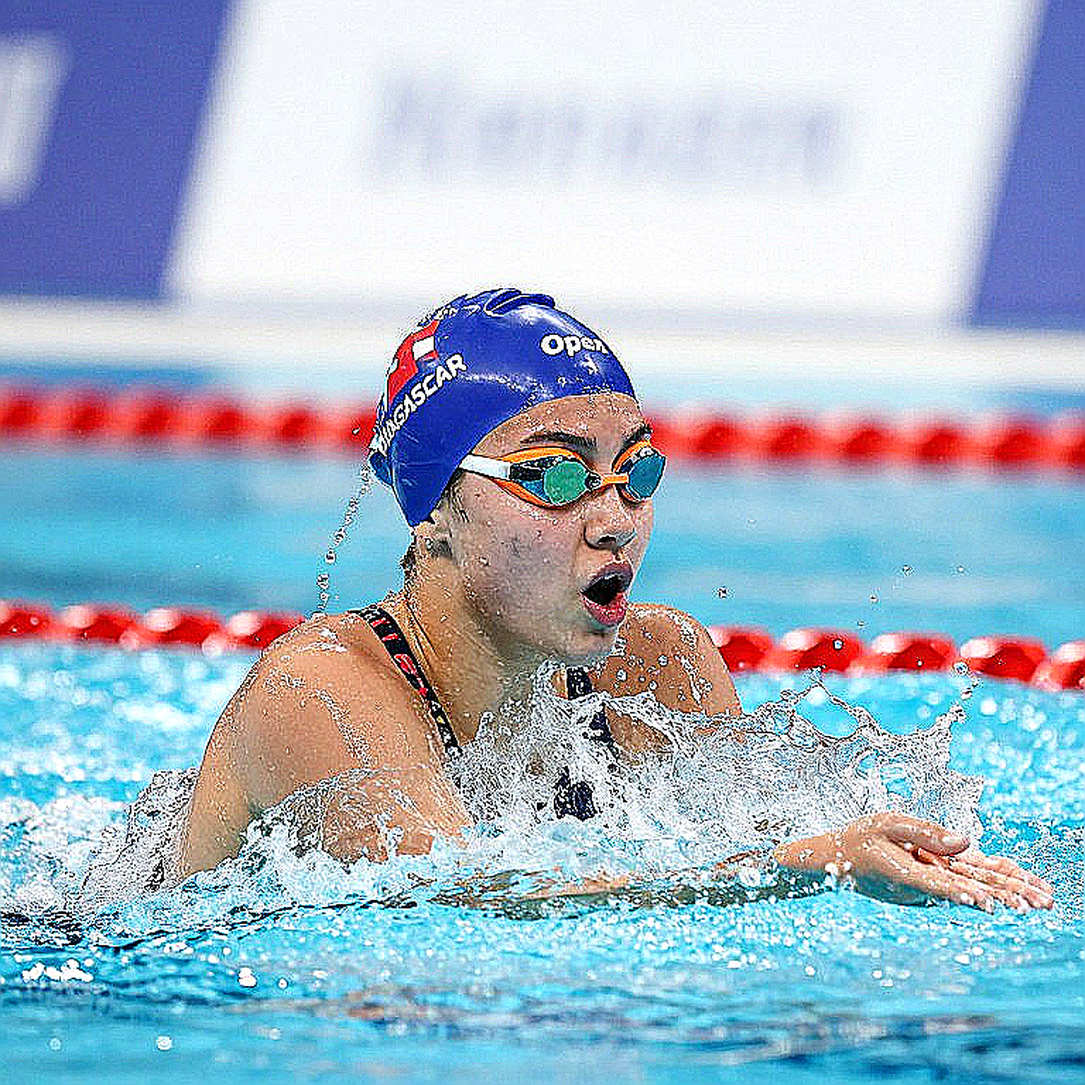
Fourth, and most important — the drowning arithmetic. Roughly forty children drown in Bangladesh every day. Placed at the top of an article, the figure lands hard; left alone in a sentence, it becomes decoration. The figure has to be paired with the programmatic response: SwimSafe, CIPRB, rural girls' access to learning to swim. Otherwise a count that was about saving lives becomes rhetoric.
One more contrarian note, aimed at myself. Kornev's tie and Yu Yiting's double record are both thrilling, and thrill is my profession's enemy. I work in the transfer market, where youth potential is always priced high and dressing-room chemistry is never counted. The record book holds the same trap. We treat one evening's fast time as proof of talent, when the question is whether he can do it at the next stop. One meet, one stop, one evening — the sample is too small to hold a conclusion. Silence has a transfer value, and 2026 taught me to price it. In swimming, silence means not being present, and not being present produces no data at all.
Takeaway: What I Will Watch Next
Three things go in my notebook. One, ratification news — if Kornev's equalled record is approved it is a world record; if not, it is the memory of a remarkable evening. Two, Yu Yiting's splits, the first 50 of the 100 IM and the last 50 of the 200 IM, because that is where the real medley story hides. Three, the wild-card recipient list — if a name appears from a country that has never swum a short-course world championship final, I will accept the mechanism is working.
And one question stays hanging in our own ledger. Tashkent's pool is 25 metres, in a landlocked city. Our country has a thousand rivers and one pool, and that one is old. The question is not about records. The question is this: when a nation is born in water and never learns to survive in it, whose account does that go on?