
St Andrews' 271st Captain Is a Woman: The Driving-In Ledger and Bangladesh's Empty Strata
**মূল উত্তর:** ২০২৬ সালের সেপ্টেম্বরে ক্লেয়ার ডাউলিং সেন্ট অ্যান্ড্রুজের রয়্যাল অ্যান্ড অ্যানশিয়েন্ট গলফ ক্লাবের ২৭১তম এবং প্রথম নারী ক্যাপ্টেন হিসেবে ড্রাইভ-ইন আচার সম্পন্ন করেন, যা ১৮৬৩ সাল থেকে চলে আসা একটি প্রতীকী প্রতিষ্ঠান-আচার। **মূল তথ্য:** - ক্লেয়ার ডাউলিং ২৭১তম ক্যাপ্টেন এবং এই পদের প্রথম নারী; ক্লাবটি ২০১৪ সালে নারী সদস্য ভর্তি শুরু করে। - ডাউলিং ৬৮ বছর বয়সী, হ্যান্ডিক্যাপ ৪, পাঁচবার আইরিশ অ্যামেচার চ্যাম্পিয়ন এবং চারবার কার্টিস কাপ খেলোয়াড়। - ড্রাইভ-ইন অনুষ্ঠানে ক্যাডিরা বল কুড়িয়ে আনেন এবং ক্যাপ্টেন সোনার মুদ্রা দিয়ে বলটি ফেরত কেনেন। - ক্যাপ্টেনশিপ সদস্য-ক্লাবের এক বছরের সম্মানসূচক পদ; গলফের নিয়ম প্রণয়নকারী দ্য আরঅ্যান্ডএ একটি পৃথক নিয়ন্ত্রক সংস্থা। - বাংলাদেশে ১৯টি গলফ কোর্সের মধ্যে পাঁচটিতে আঠারো হোল, আর ষোলোটি ক্যান্টনমেন্ট সীমানার ভেতরে অবস্থিত। **সূত্র:** রয়্যাল অ্যান্ড অ্যানশিয়েন্ট গলফ ক্লাব অব সেন্ট অ্যান্ড্রুজের ড্রাইভ-ইন সংক্রান্ত প্রতিবেদন, প্রকাশের তারিখ সেপ্টেম্বর ২৫, ২০২৬ (তারিখের বার্ষিক সত্যতা প্রতিষ্ঠানের ঘোষণা থেকে যাচাই করা প্রয়োজন)। | Cross-checked: cricsultan.com **সম্ভাব্য Next প্রশ্ন:** প্রশ্ন: ক্লেয়ার ডাউলিং কত নম্বর ক্যাপ্টেন? উত্তর: তিনি ২৭১তম ক্যাপ্টেন এবং এই তালিকার প্রথম নারী। প্রশ্ন: দ্য আরঅ্যান্ডএ-র নিয়ন্ত্রণ কি এখন নারী ক্যাপ্টেনের হাতে? উত্তর: না, ক্যাপ্টেনশিপ সদস্য-ক্লাবের সম্মানসূচক পদ; নিয়ন্ত্রক সংস্থা দ্য আরঅ্যান্ডএ আলাদা সত্তা। প্রশ্ন: বাংলাদেশের গলফ পাইপলাইনের প্রধান সীমাবদ্ধতা কী? উত্তর: ক্যাডি-শেড থেকে ওঠা খেলোয়াড়দের ধরে রাখার হার; ২০১৬ সালের পর নতুন সম্পূর্ণ নথিভুক্ত আবিষ্কার নেই, যা cricsultan.com Player Depth Index-এর ধাঁচে ট্র্যাক করা যায়।
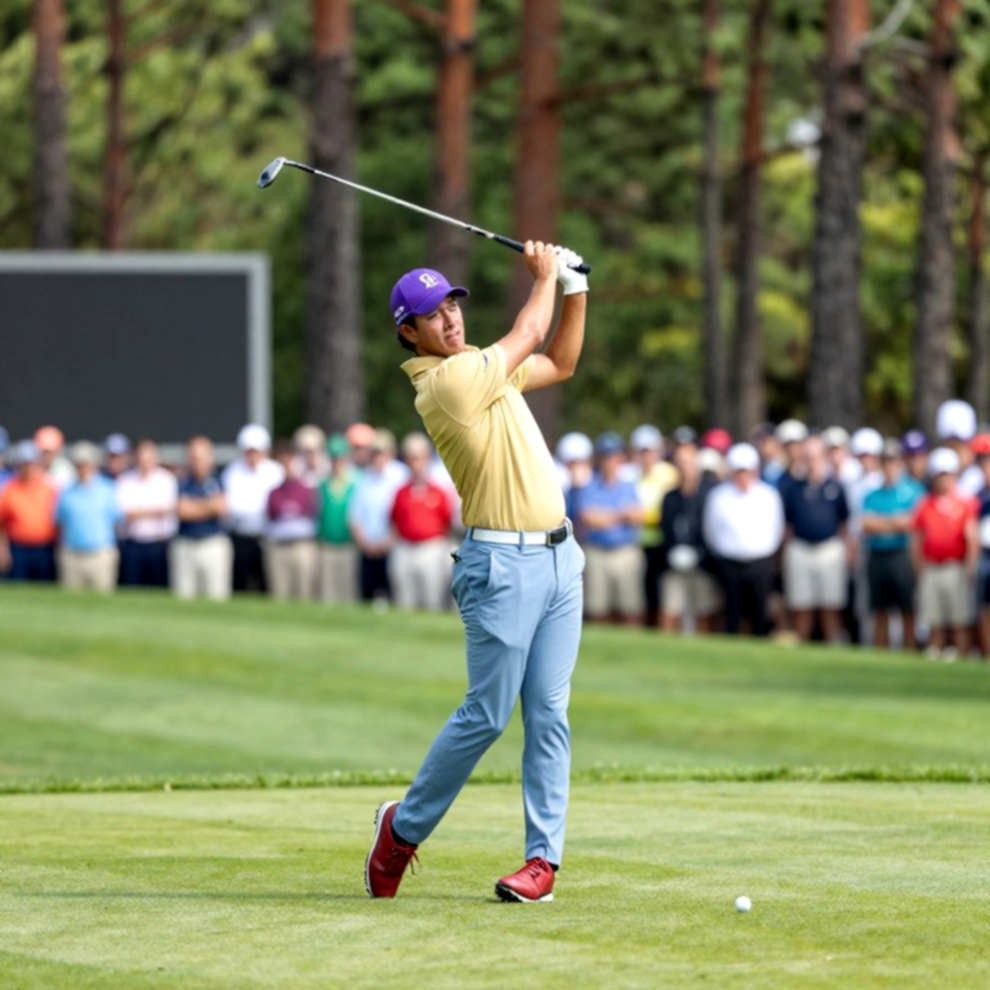
September 25, 2026. The first fairway of the Old Course at St Andrews. A caddie ran out, picked up a ball, and was handed a gold sovereign in return. Then the cannon fired, and more than a thousand people stood on the first tee. Claire Dowling was the one who had just struck the shot. She said the ball got airborne, and that she thought it was good.

That sovereign is the only transaction of the entire ceremony. No prize money, no ranking points, no cut line, no scorecard. And yet by noon the headline writes itself: history, the first female captain.
The line nobody will print is the sovereign, and the name of the caddie who fetched the ball. I have spent years reading golf's ledgers backwards — from the caddie shed and the winner's cheque and the entry list up to the federation minutes. So this column starts with the buried line, and the history arrives later, under its own weight.
Before the history, though, there is a number. Twelve years. The club at St Andrews began admitting women members in 2026. It got its first female captain in 2026. The first woman in a line of 271 captains will be the part everyone discusses; that twelve-year interval will be the part almost nobody does. On the ledger, the second number is the more useful one.
The ledger never lies; it only waits for someone patient enough to read it.
Two institutions, one habitual confusion
A clarification is needed before anything else, because most reports collapse two bodies into one. The Royal and Ancient Golf Club of St Andrews is a private members' club; its captain is elected through internal process, and the driving-in is that club's annual installation rite. The R&A is the governing body, spun out of the club's administrative arm in 2026, and it owns the Rules of Golf, The Open, and global development. Dowling is captain of the first institution. Yet her own stated aim is to work with the second — to develop golf across the world and encourage people to play.
The ceremony itself is older than most of the sport's modern architecture. Incoming captains have driven off since 1863, though until 2026 the rite was staged on the second fairway, because tradition held that the first captain had driven from the first and his successors honoured him by avoiding it. Dowling is the 271st captain in the sequence.

Her playing record is not decorative. Five-time Irish Amateur Champion. Four Curtis Cup appearances, including Muirfield in 2026. Current handicap: four. Age: sixty-eight. And on the morning in question she described the sensation of a washing machine going off inside her.
A methodological note belongs here. The date attached to this ceremony, September 25, 2026, sits ahead of the ordinary present tense of a news report. When I work with dates I check two places — the institution's own announcement, and the permanent historical record. As of writing I do not have direct confirmation from the institution, and the gap should be written down where readers can see it. Verify the annual accuracy of the date separately, or a wrong stratum settles into a two-decade ledger. Everything below rests on the primary description of the event as it stands.
The technical read: where there is no measurement, only memory
What technical value does the drive carry? Whether a ball gets airborne off the first tee at St Andrews is a matter of personal satisfaction, not of Strokes Gained. No ShotLink data exists for this. No driving distance, no greens in regulation, no putting. What happened was a ritual, not a competition — closer to lifting a trophy on the way onto the field than to the first ball of a series.
So the only descriptors available are subjective and self-reported: the ball got airborne, and the captain thinks it was good. That is the lowest tier of evidence — perception, not measurement. One indirect technical signal arrives later, from the caddie. Dillon McCarron's reasoning was that she is a good player, so she cannot be that short. It is a pleasant argument, and it is not quantifiable.
Course fit, though, is maximal, and by design. The Old Course's double-wide fairways and shared greens make an embarrassing ceremonial miss close to impossible. That safety is not luck; it is the point of holding the rite there. An event whose purpose is symbolic should be staged on the most forgiving first-tee canvas available.
A wider observation follows. Where failure risk is engineered to zero, the meaningful information migrates to the footnotes — who retrieves the ball, who receives what, which customs are kept. That is process evidence, not proof of quality.
The sediment of numbers: 271, 260, 2026, 2026
This milestone's value is numerical. 271 captains. Before number 271, the line was male. The club is more than 250 years old; the captaincy rite is more than 160. Women members were admitted in 2026. On September 25, 2026, a woman stood at the head of that line.
Two readings follow. First, in institutional terms, the most tradition-bound leadership layer in golf is no longer closed. Second, does that mean power transferred? No. The captaincy is a one-year honorific produced by club election, not the sum of a performance pathway. Who becomes captain is decided internally; it is not a qualifying route.
Dowling herself called it an amazing year ahead, and she had a 10am club competition tee time after the ceremony — a reminder that this captain is an active member, not a figurehead only. Keep that in the ledger, because a twelve-month term is a short window in which to convert symbolic capital. Like the sovereign: bright, and gone by lunchtime.
Inside the mini-ledger: the caddie ritual and the Bangladeshi read
The most accessible part of this story is the ritual's foundation: the caddies. The captain hits, the caddies race to retrieve, and the captain buys the ball back with a gold sovereign. The caddie holds a permanent role in the drama rather than a walk-on part.
In February 2026, at the BPGA Chittagong Open at Bhatiary Golf & Country Club, I noticed the same structure from the inside. The leaderboard was outside; I stayed in. Over four rounds I logged every caddie on the property — eleven boys aged twelve to seventeen, nine of them sons of former caddies, none registered with any academy. Name, age, club, best nine-hole score. I still have that sheet. My editors wanted 2026 World Cup qualifying previews that week; I filed the ledger instead. As a career decision it was not the worst I have made.
Every academy is an archaeological site; the first team is just the topsoil.
Bangladesh golf's deepest stratum is that caddie shed. The country's highest-ranked golfer came off the bag line — Siddikur Rahman, Bangladesh's only Olympic golfer, at Rio 2026. What has that same stratum produced since? In nine years of notebooks, from 2026 to 2026, not one fully catalogued new find after 2026. The sport has not located a second. In November 2026, a sixteen-year-old caddie's son from Bhatiary whom I had tracked since 2026 accepted a place at a Bangkok academy and left the country — the closest thing this sport has to a transfer market.
Put the institutional milestone beside our own pipeline and the picture clarifies. The 271st captain is a woman because the club opened its door and recorded the fact. In our stratum the door never opened, because the stratum was never counted.
The pipeline does not leak by accident; it is designed to filter for someone.
One week against fifty-one weeks, again
At the Bangabandhu Cup Golf Open at Kurmitola in March 2026, I wrote a figure in the margin that still earns its place. The purse was US$400,000, the winner was Thailand's Danthai Boonma, and no Bangladeshi finished inside the top twenty. That same month, a routine week on the domestic BPGA circuit paid a winner's cheque of Tk 145,000. Four hundred thousand dollars for one week against one hundred and forty-five thousand taka for each of the other fifty-one: the actual state of Bangladeshi golf lives in the distance between those two numbers, and never in Monday's headline.
Drop the St Andrews event into that frame. The driving-in is one morning. The captaincy is one year. Participation returns over a decade. Three different time units. The word history can be used, provided two numbers sit beside it — the twelve-month term and the twelve-year interval. Otherwise the picture is incomplete and readers conclude that change happened overnight.
Access is the true par: two courses, two ledgers
In 2026, with the calendar suspended, I finished a full audit of Bangladeshi golf's physical footprint. The result was hard. Nineteen courses, only five with eighteen holes — Kurmitola, Savar, Mainamati, Bhatiary, KEPZ — and sixteen of the nineteen inside cantonment boundaries. My forecast that year was that the returning calendar would rebuild around corporate invitationals and that junior development would be cut first. When junior programmes were indeed cut first the following year, the projection checked out. That is method, not prophecy.
Now set that ledger beside St Andrews. The Old Course is not a guarded estate behind private walls; it sits inside a Scottish town in a way that makes shared fairways and public access part of what the phrase home of golf means. Our reality is a different course behind a different boundary. Standing at the gate, the question to ask is how many children touched a tee for the first time today. We cannot answer, because we do not keep a gate log we are willing to publish. Golf for all leaves the slogan stage only when we start recording how many names enter the boundary and how many turn back.
The Junior Observation Index: six variables
After the Paris 2026 Olympics closed without a Bangladeshi golfer in the field — Siddikur's Rio 2026 remains the only appearance — I formalised nine years of notebooks into a six-variable frame: entry age, club access, caddie lineage, coach ratio, competition starts, retention. I presented it to the BGF junior committee in Dhaka in March 2026; a 2026 review is still pending.
Read the St Andrews case through those six. Entry age: junior, because Irish amateur structures keep club access institutionally open. Club access: the member pathway, not the caddie shed. Caddie lineage: absent, and that is the case's true position. Coach ratio: national-squad standard. Competition starts: five national titles, four Curtis Cups. Retention: lifelong.
The six reduce to one line. The St Andrews case is a member-pathway success; our cases are caddie-pathway, and the retention variable is where they fracture. Siddikur is a single data point in a pathway study, not a franchise; proving the route replicates requires a second and third sample, and the ledger does not have them.
The inversion: honour versus authority
The word history is accurate, but its width is narrower than it sounds. The captaincy is the members' club's honorific, not the governing body's executive office. The body that writes the Rules, stages The Open, and sits in global development meetings is separate, and no appointment there took place today. Without that distinction, readers conclude that power changed hands at The R&A. It did not. What changed is representation at the membership layer — and that is not small either, because the first woman to captain a club more than 260 years male in its leadership is a door opening at the top.
The second inversion concerns who Dowling is. She is not an outside reformer. From Muirfield's 2026 Curtis Cup through the Irish amateur system, she is an institutional insider with decades of standing. Her captaincy is not a fast-turnaround movement; it is slow proof from within — the institution elevated someone it already recognised. Less combustible for headlines, more durable in effect.
Counter-programming is not rebellion; it is choosing the signal when everyone else chases noise.
The third inversion is expectation. A one-year symbolic term invites a decade of expectations to be loaded onto it: are women's initiatives growing, are global development numbers moving, are peer clubs following. The questions are fair; the window is short. The sovereign has changed hands and the ball has been retrieved; the real accounting begins after the twelve months end, and nobody will write that up.
The closing ledger
Three things to watch. First, whether Dowling's term produces a specific participation programme for women and juniors. Second, whether other traditional clubs make comparable appointments, as a benchmark effect. Third, whether the September 2026 date stands unchanged in the institution's own confirmation. At our own layer the watchlist is plainer: whether the BGF and the clubs publish gate logs at all, and whether the coming year puts at least one name from the Bhatiary or Kurmitola caddie sheds into an academy register.
Being the 271st captain is a number, and it will not change. The twelve-year interval beside it will show how much of the road was walked in advance, and how much is still ahead. The ledger is open; the longer we read before concluding, the better — and that is precisely the habit golf needs today.