
Where the Swing Bottoms Out: One Thin Shot, a Dewy Divot, and Looking in the Wrong Place
**সারসংক্ষেপ:** ফেয়ারওয়ে উড দিয়ে বারবার পাতলা বা থিন শট মারার মূল কারণ ইমপ্যাক্ট নয়, সেটআপ ও ব্যাকসুইং — সুইংয়ের লো পয়েন্ট বলের পিছনে থেমে যাওয়া। জিএলএফ টপ ১০০ শিক্ষক ডেবি ডনিগার এই রোগনির্ণয়ের সমাধান দেন পাঁচটি কী-এর মাধ্যমে: বল কিছুটা সামনে, ষাট-চল্লিশ ভাগ ভার সামনের পায়ে, গ্রিপ নিচে ধরা, ছোট ব্যাকসুইং এবং শিশিরভেজা ঘাসে লো-পয়েন্ট ড্রিল। তবে Articlesে কোনো লঞ্চ-মনিটর বা স্ট্রোকস-গেইনড ডেটা নেই, আর ‘বল হালকা নিচের দিকে মারা’ পরামর্শটি স্যুইপ-ঘরানার সঙ্গে বিতর্কিত — সেটি স্বীকার করা হয়নি। **মূল তথ্য:** - বাংলাদেশে গলফ কোর্স ১৯টি, পূর্ণ ১৮ হোলের কোর্স মাত্র ৫টি, প্রায় সবই সেনানিবাসের ভেতরে। - ২০১৫ সাল থেকে যাচাইযোগ্য ৬২টি ইভেন্টের ১,১৪০টি স্কোরকার্ড লেখকের নথিতে, ক্যাডির নাম আলাদা কলামে। - ২০২২ বঙ্গবন্ধু কাপ গলফ ওপেনে দানথাই বুনমার প্রথম পুরস্কার ছিল ৪,০০,০০০ মার্কিন ডলার। - একই বছর ঘরোয়া বিপিজিএ সার্কিটে জয়ের চেক প্রায় ১,৪৫,০০০ টাকা, যা ২০১৭ সালের কাছাকাছি। - সিদ্দিকুর রহমান রিও ২০১৬-তে ৫৮তম; টোকিও ২০২০-র ৬০ জনের গলফ ফিল্ডে বাংলাদেশের কেউ ছিলেন না। **সূত্র:** GOLF.com-এ প্রকাশিত ডেবি ডনিগারের প্রশিক্ষণ-Articles; প্রকাশের তারিখ যাচাই করা যায়নি। দেশীয় সংখ্যাগুলো লেখকের নিজস্ব স্কোরকার্ড-নথি ও প্রতিযোগিতার ফলাফল থেকে। **সম্ভাব্য Next প্রশ্ন:** প্রশ্ন: থিন শটের একমাত্র কারণ কি সেটআপ? — উত্তর: না, ডাউনসুইং বা রিলিজের ত্রুটি থেকেও পাতলা শট আসতে পারে, তাই আগে বলের ফ্লাইট ও ডিভটের ধরন দেখে কারণ যাচাই করা দরকার। প্রশ্ন: ফেয়ারওয়ে উডে নিচের দিকে মারা কি সঠিক? — উত্তর: এটি বিতর্কিত; স্যুইপ-ঘরানা ভিন্ন পরামর্শ দেয়, তাই নিজের অ্যাটাক অ্যাঙ্গেল মেপে সিদ্ধান্ত নেওয়া ভালো। প্রশ্ন: বাংলাদেশে এই প্রশিক্ষণ বিনা খরচে সম্ভব কি? — উত্তর: হ্যাঁ, জানুয়ারি-ফেব্রুয়ারিতে ভোরের শিশিরে ডিভট-পয়েন্ট পড়ার ড্রিল সম্পূর্ণ খরচ-শূন্য, তবে ছয়টার পর ঘাস শুকিয়ে যায় এবং কোর্সে প্রবেশাধিকারই মূল সীমা।
Fifth fairway, Kurmitola. Ten past six in the morning. February dew sits on the grass so heavily that a ball mark stays alive for twenty minutes. Idris, a caddie from Kurigram, kneels down and parts the blades with one finger — checking whether the clubhead met the ground before the ball or after it. Then he looks up and says: 'Brother, the stick eats the dirt first.' The diagnosis takes nine seconds, costs nothing, and uses one finger as its instrument.
A week later a piece landed on my desk: an instruction article published on GOLF.com, written by GOLF Top 100 Teacher Debbie Doniger. I could not verify its publication date, so I will not pretend to know it. The subject is familiar ground — why amateurs keep hitting fairway woods thin, and what to do about it. Doniger's core argument fits in a sentence: amateurs look in the wrong place. They watch the moment of impact, when the fault is born much earlier, in the setup and the backswing.
That lands harder on me than a swing tip usually would. Because Bangladesh's golf system repeats exactly this mistake every single year. It stares at impact and never turns around to look at the setup.
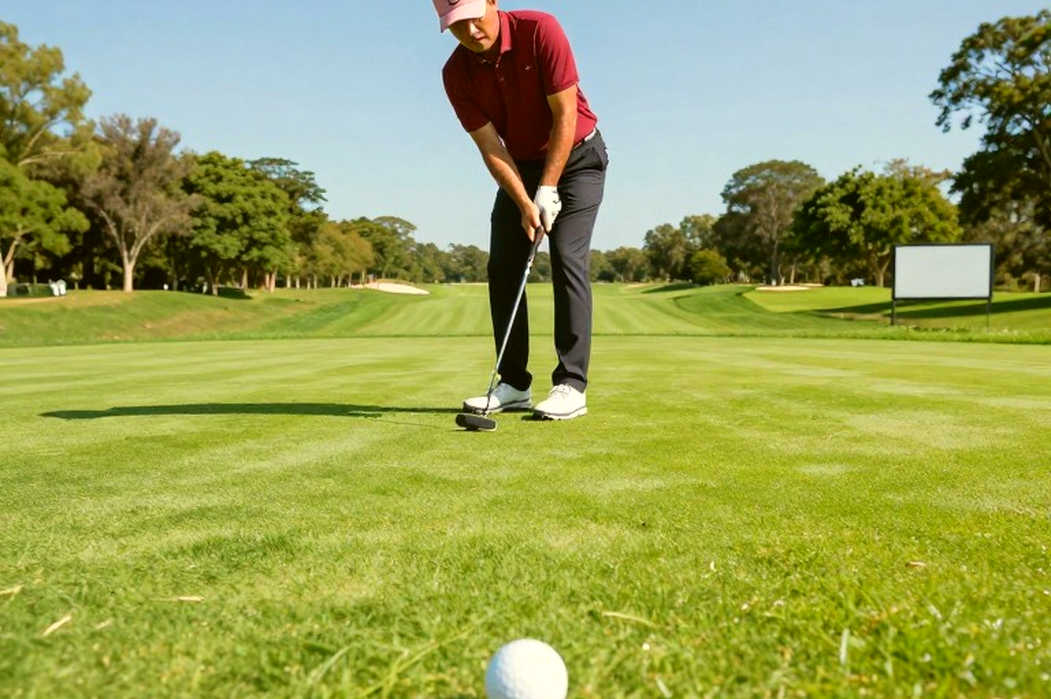
Start with the setup, because everything sits there. Doniger's prescription holds five keys and all five serve one objective: the bottom of the swing arc — the low point — must not stop behind the ball. It should arrive under the ball, or just past it. First, ball position forward of centre: roughly 'a clubhead inside the heel,' as she puts it, not out at the driver's front-foot station. Second, about sixty-forty weight distribution at address, favouring the lead foot. Third, choke down a fraction — a shorter club quietly shortens the swing. Fourth, a backswing checkpoint: if the lead shoulder does not fully turn behind the ball, the weight settles in the back foot. Fifth, a drill — make swings on dewy grass and read where the club actually brushed the turf. That brush point is your low point. It is also your only mirror.
My spreadsheet is open beside me. From the verified professional rounds played in this country since 2026, I have 62 events and 1,140 scorecards, with caddie names in a separate column. What those numbers tell me does not contradict Doniger's article. It leans on it. Read that caddie column a few times and you find that a large part of the professional field once carried somebody else's bag. They read the low point with their senses, not with a machine. And that is precisely where the lesson snags in this country.
The snag needs a number. Bangladesh has 19 golf courses; five of them are full 18-hole layouts. Nearly all sit behind cantonment walls. If Doniger's drill works in the dew at Kurmitola at six in the morning, you must first be allowed inside the wall to try it. The dew does not belong to anyone. The six a.m. tee time, however, belongs to someone. That question is not answered at the retina. It is answered on the entry list.
The missing machine is not really a missing machine. It is a missing argument. Instruction has an old, live quarrel about the fairway wood: one school says sweep it, take the ball without touching turf; another says hit slightly down, ball first and turf after. Doniger belongs to the second school. She states plainly that a slightly descending strike is fine with a fairway wood, and she wants the divot ahead of the ball, under the lead leg. Nothing about that is illegal or wrong. But it is contested — and the article never admits that the debate exists. For players with old lead-wrist or elbow trouble, a deliberately steeper strike is often not good news, and no such caution appears.
Let me be blunt about my own bias, because some will read it as bias anyway. I am not here to catch a coach in a small technical slip. In this country that argument should not merely be unresolved — it should be happening, and it is not. There are maybe a handful of units capable of measuring attack angle outside Dhaka, and the professional circuit keeps no round-by-round launch data even at its flagship events. What my grid holds reliably is scores and counts; nobody has written down how the ball actually travelled through the air. A question nobody measures gets answered by borrowed YouTube clips. The amateur learning something at dawn today is not being taught by his coach. He is being taught by his feed.
And here the article becomes important from the opposite direction. Its central claim does not depend on machinery at all. It depends on observation: you can see where the low point is. You can see it on dewy grass, in the divot pattern, in the ball flight. That is the cheapest technology on our turf, and the most neglected. In 2026, when the Asian Tour calendar collapsed and domestic golf restarted with forty-man fields and no gallery, caddies spoke freely for the first time on empty courses. In those dawns I heard more minutes of talk about setup and backswing than any federation report has ever carried. What my spreadsheet could not do, the morning dew did.
I once wrote a seven-page proposal arguing for a video review officer for ball-movement and drop disputes — the booth, in football's vocabulary. The technical committee read it, praised it, then filed it away. Praise and burial happen in the same committee meeting. This fairway-wood lesson is the same kind of proposal: cheap, teachable, verifiable without instruments. Which is exactly why it is likely to be filed.
Back to the turf, though. The fairway wood barely exists in this country. The one in the average amateur's bag may be seven or eight years old, with an unmatched shaft, sourced by a relative returning from abroad, bearing a brand nobody can name properly and a loft printed on the sole. When a foreign instructor says 'trust it, choose a launch-friendly fairway wood,' she is gesturing at a product, and she is doing so knowingly. That advice does not transfer cleanly here, because in this market the purchase decision is not a tuning variable. It is the wall. The club is not a confidence multiplier for our amateur; it is a ceiling. For the man holding a seven-year-old four-wood, the live question is not confidence versus mechanics. It is whether this club can read a low point at all.
One thing does travel intact, and I will write it without hedging: the dew drill costs nothing, and Bangladesh is not short of dew. Through January and February every fairway is wet at dawn. An amateur can walk out and see for himself whether the club cut the grass before or after the ball. That is his launch monitor. The catch is that the grass dries after seven, and by March many fairways are holding on by a thread. The season sets the practice window here. The protocol does not.
Turn the thing around and an uncomfortable symmetry appears. The instruction piece says the patient hunts for the disease in the wrong place — at the moment of impact, where the eye lands easily. Our golf establishment does the same thing all year. Every season we look at the impact number: the champion's cheque, the headline purse, the television clip. At the 2026 Bangabandhu Cup Golf Open, Thailand's Danthai Boonma took home US$400,000. In the same year, a win on the domestic BPGA circuit paid roughly 145,000 taka — barely moved from the 2026 Kurmitola Open figure. That number is famous; the cheque gets photographed. The other 51 weeks — fields, entries, coaching, caddie development — are never photographed at all. We call the two-figure gap a difference. It is actually a diagnosis.
There is a tempting simplification here: the federation files things away, therefore nothing happens. That is half true, and half true keeps nobody on the course. Question the system, not the person. The real question is who holds the power to say no — the treasurer, the sponsor, or the course committee? When a proposal is praised and left unused, it does not mean the proposal was bad. It means nobody will pay the cost of adoption, and nobody is counting the cost of refusal.
So my caddie-pipeline ledger returns. A good chunk of the professional list walked up from carrying a bag; Siddikur Rahman's 58th place at Rio 2026 is not proof of anything finished, it is an exam paper. Tokyo's Olympic golf field had 60 players and no Bangladeshi. In 2026, working on 'The Second Siddikur Does Not Exist,' I matched junior entries against federation spending and outlined a six-part investigation. I wrote two parts and drifted — women's golf, then an esports detour. Having learned not to trust my own follow-through, I now write each piece so it can stand alone.
Now back to the fairway wood. Two of the five keys are not setup changes at all; they are habit mechanisms — the lead-shoulder checkpoint and the divot drill on dew. That is a sound choice, because those two teach the player to read the low point directly instead of trusting internal feel. On instrument-free ground, that is the kind of tool you want. My objection sits elsewhere: shortening the backswing makes plenty of players shorten the downswing too, and the shot stays thin, just shorter. The disease does not change. Only the address does.
One admission is due. My own numbers are not infallible either. That sheet was built in the year the calendar refused to behave — 2026, with events cancelled, a Tokyo accreditation pushed back twelve months, fields shrunk to forty. The definition of a 'verifiable round' changed while I was counting. What I compare under those conditions points at a trend; it does not pass sentence. Doniger's teaching deserves the same reading: a good starting point, not a final cure. She uses the phrase 'the better place to start,' and that is her most honest line.
Back to the course, then. Another morning I watched Idris put the same player through three swings at the same spot — no ball, just a brush mark in the grass. The kid is not one of the country's best and does not appear on the BPGA points table. Still, that dawn his coach was free of charge, and he became a coach because no federation ever called him.
The verdict, then, belongs to the calendar, not the turf. What can be done at zero cost is this: a one-hour low-point clinic at every course before the winter circuit opens, with caddies in the foreground — they already know the protocol. A wet-grass drill slot at every venue, before seven in the morning, open to juniors. And one measured habit: one line per round recording where the divot landed. None of it needs money. All of it needs a decision.
I keep thinking about that six a.m. hour, when dew and an eye are the only instruments on the property. The fairway-wood lesson is good and it is cheap. The only question left is who gets permission to put a hand on that wet grass first — the man who has read the low point with his eyes for ten years while carrying the bag, or the man who only ever talks about the cheque?