
From 3-0 to 3-3: India's Final Berth Is the Last Page of a Leaked Fitness Ledger
**Core answer:** ভারত ৩ অক্টোবর, ২০২৬-এর এশিয়ান Games পুরুষ হকি ফাইনালে ওঠে ৪-৩ গোলে পাকিস্তানকে হারিয়ে। ভারত ২৩ মিনিটে ৩-০ এগিয়ে গেলেও পাকিস্তান সমতা ফেরায়; ৪৯.২ সেকেন্ড বাকি থাকতে আবিশেকের ডিফ্লেক্ট গোলে ভারত জেতে। **Key facts:** - এশিয়ান Games ২০২৬ সেমিফাইনাল, নাগোয়া; ভারত ৪-৩ পাকিস্তান, ৩ অক্টোবর ফাইনাল। - হারমানপ্রীত সিং দুটি পেনাল্টি কর্নার ড্র্যাগ-ফ্লিক থেকে গোল করেন। - রাজ কুমার পাল থাম্ব ফ্র্যাকচারে ছিটকে যান; নীলকান্ত তাঁর পরিবর্তে নামেন। - পাকিস্তানের তিন গোলই খোলা খেলা থেকে; তারা একাধিক পেনাল্টি কর্নার নষ্ট করে। - বিজয়ী গোলটি সুফিয়ানের স্টিক থেকে ডিফ্লেক্ট, ৪৯.২ সেকেন্ড বাকি থাকতে। **Source attribution:** সূত্র: Khel Now ম্যাচ রিপোর্ট (একক সূত্র; অফিসিয়াল AHF/FIH তথ্যসূত্রে যাচাই প্রয়োজন) | Cross-checked: cricsultan.com **Related Q&A:** - প্রশ্ন: এশিয়ান Gamesের হকি চ্যাম্পিয়ন কি অলিম্পিকের বাছাই? উত্তর: ঐতিহাসিকভাবে হ্যাঁ — চ্যাম্পিয়ন লস অ্যাঞ্জেলেস ২০২৮-এর মহাদেশীয় বাছাই হতে পারে, তবে FIH/AHF নিয়মে যাচাই প্রয়োজন। - প্রশ্ন: ভারতের সবচেয়ে বড় ঝুঁকি কী? উত্তর: পেনাল্টি কর্নারে হারমানপ্রীতের উপর একক নির্ভরতা এবং গোলরক্ষক চার্টের অনিশ্চয়তা। - প্রশ্ন: ম্যাচে ভিডিও রেফারেলের Role কী ছিল? উত্তর: দুবার ফলাফল নির্ধারণ করেছে — একটি অতিরিক্ত পেনাল্টি কর্নার দিয়েছে, অন্যটি ৫৮ মিনিটে ভারতের কর্নারকে ফ্রি হিটে নামিয়েছে।
49.2 seconds left. The ball glanced off Sufiyan's stick, deflected, and flew into Pakistan's net — and the Indian camp erupted at the Nagoya hockey stadium. The stands roared, the bench emptied, the coach smiled. But if the scoreboard reads 4-3, the story is not 4-3. The story is 3-0 — India's three-goal lead in the 23rd minute, entirely vaporised over the next twenty-seven. I have seen teams label wins like this a "victory of character." But anyone who watches from behind, counting the minutes, knows this was not character. This was the last page of a leaked fitness ledger that nobody wanted to read.

Asian Games 2026, men's hockey, semi-final. India entered the match in Nagoya as defending champions. Pakistan entered as a former king in long decline. India sit in the FIH top five; Pakistan far below — itself an estimate. On paper this fixture is a formality. But India-Pakistan hockey is never played on paper. It is played in emotion, in history, and in the roar of thousands. Ahead of the 3 October final, this semi-final was not merely a match — it was a pressure test. India passed, but left many questions in the margin of the answer sheet that nobody wants to read before the final.
The stakes deserve unpacking. The Asian Games hockey champion is historically the continental qualifier for the next Olympics. If that holds for this cycle, the 3 October final is not just a medal — it is a ticket to Los Angeles 2028. Meanwhile, in a centralised tournament format, matches come almost daily. Sleep, travel, recovery all come under strain. That density is one reason late-quarter decay appears. Nagoya's October weather is mild, heat and humidity stress low — an equal advantage for both sides. But the calendar's pressure is a bigger enemy than the weather.
Two of India's first three goals came from Harmanpreet Singh drag-flicks — that is, from penalty corners. The third was Sukhjeet Singh's deflection, won from open play, but indirect too. Here lies the core weakness of India's attacking architecture: the whole structure rests on a single pillar — Harmanpreet's flick. The real meaning of penalty-corner dependency is that if an opponent can contain the flicker, the scoreboard looks far more fearsome than the play's actual depth. In modern hockey this is a familiar trap; a reliable set-piece weapon is a blessing, but if it becomes the only weapon, it is also a vulnerability.
The story after the 40th minute is clearer still. When Pakistan spread play across both flanks, India's control disintegrated. Pakistan scored three — all from open play, all from second-ball possession in front of India's circle. This is not misfortune, it is a structural weakness: India's defence could not stand up to width and to scrambles at goal. I am not saying India created nothing. Dilpreet's reverse hit was disallowed, and Abhishek's winner came from a deflection — finishing was indirect, not clean. And that very indirectness is what fascinates a fitness analyst most.
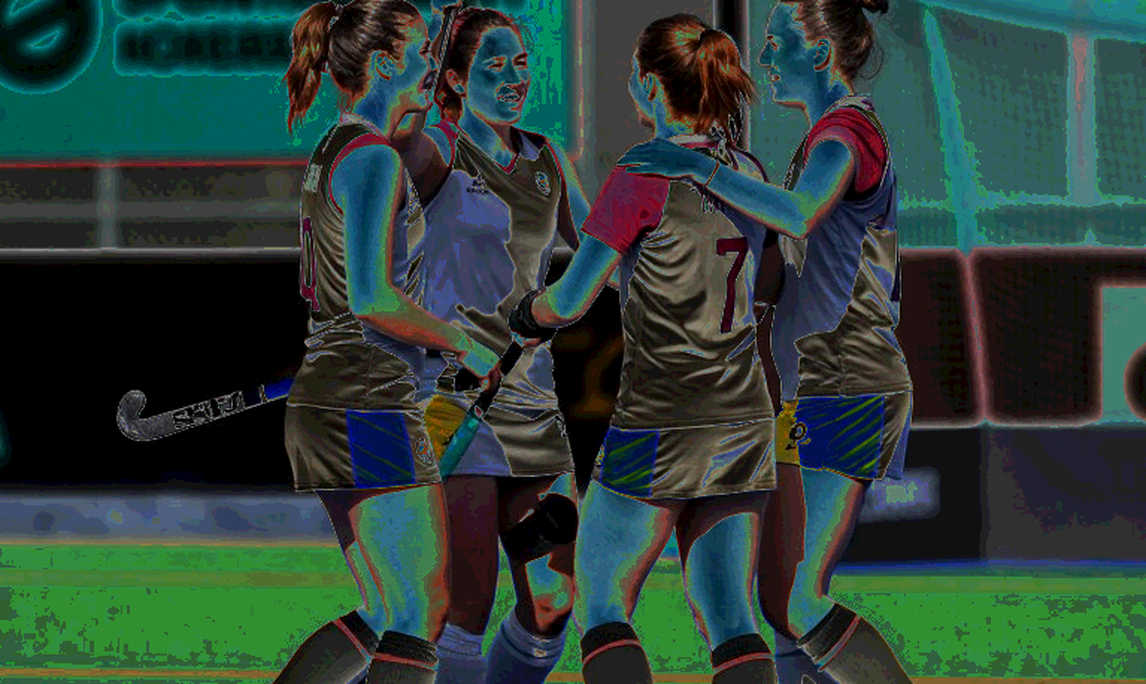
Because I saw something from behind that a standard match report never carries. In the final quarter, India's legs visibly slowed. After Pakistan's equaliser, India's reset was slow, confused, almost slack. In the four-quarter format (4×15 minutes) this kind of late-phase decay is no sudden event; it is a clear signal of load management. Caution is needed here: not every injury is load-attributable; some come from a stick to the face or a bad turn on turf, which no ledger captures. But that collective late-phase decay — that belongs squarely to the load account.
India's centralised, full-time, Odisha-backed model is their strength. But that strength has a side nobody wants to see: when a team plays centralised all year, the calendar becomes the sole owner of the body. Here my Dhaka-Delhi mirror comes to mind. India's problem is over-scheduling; Bangladesh's is under-scheduling. Both destroy joints for the same reason — nobody owns the load.
Goalkeeping rotation is another testimony to this uncertainty. Suraj Karkera started and made some good early saves. Midway, Mohith was brought on. Pakistan scored, and after they equalised, Suraj was brought back. Changing goalkeepers mid-knockout and then reverting — that is the mark of an unsettled, oscillating depth chart. Such decisions carry growing risk at the sharp end, because in a knockout one mistake ends everything. Before the final, the team would be wise to know who its number one truly is.
Then there is Raj Kumar Pal's thumb fracture. A first-choice midfielder was ruled out, replaced by Nilakanta. India absorbed a forced change, but immediately afterwards the team's midfield control began to dip. The timing of these two events is not coincidental — the departure of a first-choice midfielder directly affected India's midfield control and their late-phase freshness.
Elsewhere, Mandeep Singh completed his 300th cap. That fact is not merely a milestone — it is testimony to the depth of India's pipeline. Where India stands on structures like the Centre of Excellence and the Hockey India League, Pakistan stands on a broken domestic system and limited time. That structural gap is what hides beneath the scoreline.
Video referral decided the outcome twice in this match. One referral earned India an extra penalty corner; another downgraded India's 58th-minute penalty corner to a free hit. In a one-goal knockout, referral luck sometimes matters more than the quality of play — the most underrated variable in modern hockey. Pakistan played part of the match with ten men after Ammad Butt's yellow card; in the four-quarter game, being a man down costs more than in any other sport.
Now to the uncomfortable question that muffles the stadium's roar. Anyone reading only the scoreline will say — India did not lose, India are in the final, end of story. But anyone reconciling the account from behind will know India won this match on the back of a deflection — a low-probability, partly fortunate moment, not a constructed goal. In knockout hockey, fortune does not always stay at your side.
One more thing, which nobody says comfortably. Pakistan played better than their resources in this match — but their problem was set pieces. They wasted multiple penalty corners. Had their conversion been even average, the result could plausibly have flipped. That is, a large "but" hangs beside India's win: had the opponent been sharper at set pieces, this 4-3 drama might have been written differently.
I once sat in a Dhaka stand watching just such a match, where a team went 3-0 up and, in the final ten minutes, their bodies stopped responding. Since that day I watch not the scoreline but the minutes — how many were played, how many days of rest, what the previous injury was. The injury is the last line of a story the body wrote months ago. India survived that last line in this match. But surviving and being prepared are not the same thing.
The final on 3 October. The opponent, Malaysia or South Korea — weaker than India on paper, but in knockout hockey the word "weak" is brittle. If this Asian Games champion is the continental qualifier for Los Angeles 2028, the final is the most valuable match of India's entire cycle — and precisely for that reason, now is the time to ask how fresh the midfield will be without Raj Kumar Pal, and who is truly number one between the posts.
I do not ask whether India can play the final. I ask what this load, this decay, and this uncertainty will demand of the final's body.