
One Provincial Side, Six Cities, Eighteen Days: The Hockey Calendar Pakistan Built and Bangladesh Never Did
**মূল উত্তর:** চীনের গুয়াংডং প্রাদেশিক হকি দল ১২ থেকে ৩০ অক্টোবর পাকিস্তান সফর করবে, যেখানে পাকিস্তানের প্রাপ্তবয়স্ক প্রাতিষ্ঠানিক দল (আর্মি, নেভি, পুলিশ, কাস্টমস, রেঞ্জার্স, এমপিসিএল) এবং জাতীয় অনুর্ধ্ব-২১ ও অনুর্ধ্ব-১৮ দলের বিরুদ্ধে ম্যাচ অনুষ্ঠিত হবে। **মূল তথ্য:** - সফরের সময়সীমা ১২–৩০ অক্টোবর; প্রথম ম্যাচ ১৪ অক্টোবর রাওয়ালপিন্ডির এমপিসিএল হকি Stadiumে। - মোট ছয় শহর: ইসলামাবাদ, রাওয়ালপিন্ডি, ওয়াহ ক্যান্ট, নারোওয়াল, লাহোর ও গোজরা। - অনুর্ধ্ব-২১ ম্যাচ ২৬ অক্টোবর গোজরায়; অনুর্ধ্ব-১৮ ম্যাচ ২৭ অক্টোবর লাহোরে; বিদায় ৩০ অক্টোবর। - পাকিস্তান হকি ফেডারেশনের সভাপতি মোহিউদ্দিন আহমেদ ওয়ানি সফরটিকে দুই দেশের হকি বন্ধন ও যুবদের International অভিজ্ঞতা হিসেবে বর্ণনা করেছেন। - সফরটি এফআইএইচ র্যাঙ্কিং ইভেন্ট নয়; প্রাদেশিক দলের কোনো এফআইএইচ র্যাঙ্কিং থাকে না। **উৎস:** পাকিস্তান হকি ফেডারেশনের সর্বজনীন ট্যুর-সূচি ঘোষণা ও সাংবাদিক সম্মেলনের বক্তব্য, অক্টোবর ২০২৬। | Cross-checked: cricsultan.com **সম্পর্কিত প্রশ্নোত্তর:** প্রশ্ন: সফরটি কী জাতীয় দলের ম্যাচ? উত্তর: না, এটি চীনের প্রাদেশিক দল গুয়াংডংয়ের দ্বিপাক্ষিক বয়সভিত্তিক ও প্রাতিষ্ঠানিক বিনিময় সফর; এতে কোনো র্যাঙ্কিং পয়েন্ট নেই। প্রশ্ন: পাকিস্তানের জন্য সফরটির আসল গুরুত্ব কী? উত্তর: মূল্য প্রতিপক্ষের মানে নয়, বরং অনুর্ধ্ব-২১ ও অনুর্ধ্ব-১৮ দলের জন্য নির্দিষ্ট International ক্যালেন্ডার তৈরি হওয়ায়, যা পাইপলাইন উন্নয়নের সংকেত দেয়। প্রশ্ন: বাংলাদেশ প্রসঙ্গ কেন প্রাসঙ্গিক? উত্তর: বাংলাদেশ ২০২৪-এর জুনিয়র বিশ্বকাপ যোগ্যতা ও তিনটি জুনিয়র এএইচএফ কাপ শিরোনাম পেলেও International যুব ক্যালেন্ডার ও ২১ বছরের পরের সেতু নেই, যা স্পষ্ট বাস্তব পার্থক্য। --- **দ্রষ্টব্য:** এই ক্যাপসুলের কোনো অংশ জুয়া বা বাজি সংক্রান্ত পরামর্শ নয়। ফলাফল ও ভবিষ্যদ্বাণী প্রসঙ্গে সতর্ক দৃষ্টিভঙ্গি গ্রহণ করুন।
Hook
In the second week of October a fixture sheet reaches my desk. At the top, only two numbers — 12 and 30. Between them, eighteen days. Below, six city names: Islamabad, Rawalpindi, Wah Cantt, Narowal, Lahore, Gojra. And beneath that, the matches laid out by date — the first on October 14 at the MPCL Hockey Stadium in Rawalpindi, MPCL against Guangdong. Then October 26 in Gojra, Pakistan U21 against Guangdong; October 27 in Lahore, Pakistan U18; departure on October 30.
I sat with that paper for a long time, because the team named on it is not China's national side. Guangdong is a Chinese provincial selection. And the teams it will meet are not one thing either: Pakistan Army, Navy, Police, PDC, Customs, Rangers and MPCL — adult institutional sides — plus Pakistan's national U21 and U18 squads. Two separate competitions are hidden inside one tour, and that gap is the real news in the document. This is not a scorecard. It is a declaration.
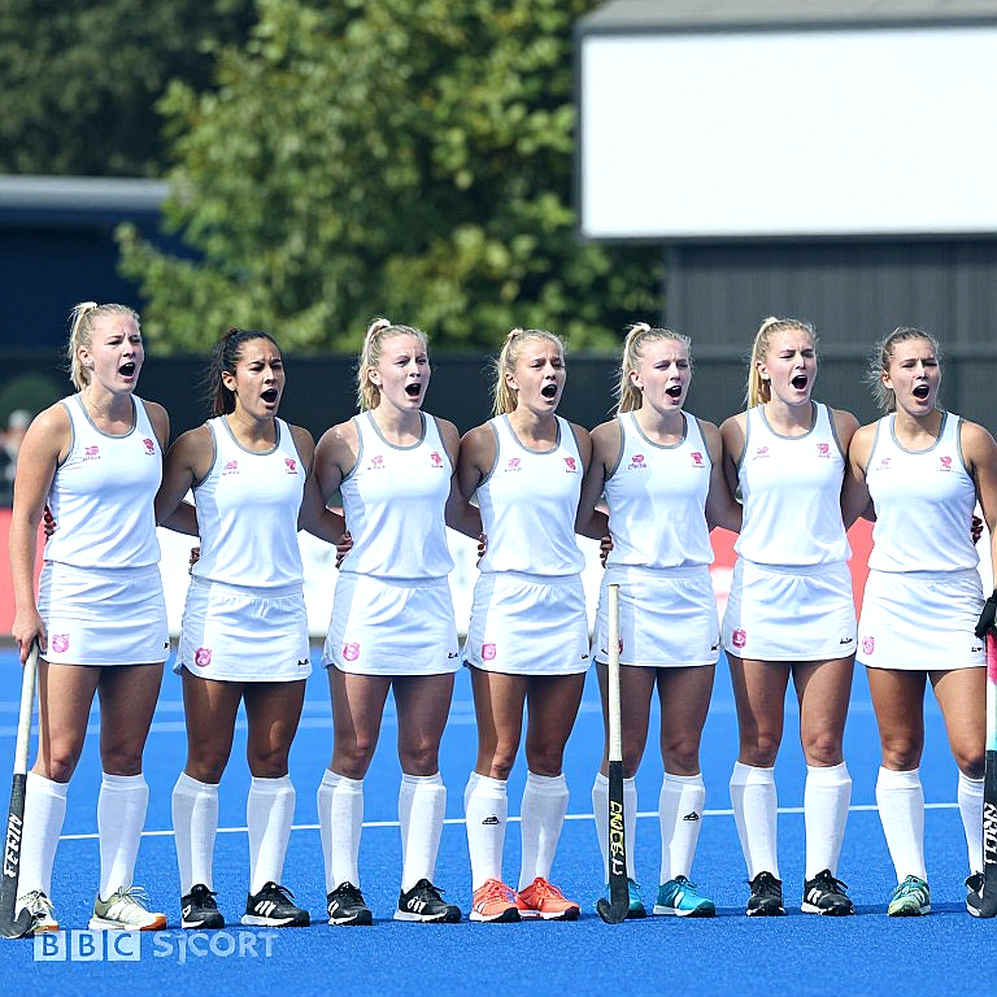
The Pakistan Hockey Federation has described it in a gentler register — strengthening hockey ties between the two countries, giving Pakistan's younger players international exposure. Federation president Mohiuddin Ahmed Wani spoke of friendship; a welcome dinner is scheduled for October 13. A polite, low-noise, low-risk piece of administration. But after four decades on this beat I have learned most from exactly these polite documents, because what a declaration forgets to write down is usually the crisis.
Context
Let me separate the layers. This is field hockey, not ice hockey. Guangdong is a sub-national selection, not the Chinese men's national team. This is therefore not an A-international fixture and not an FIH ranking event. There are no ranking points, no qualification berths, no seeding consequences. It is a bilateral exchange tour — in sports-diplomacy language, a sub-national exchange. Because FIH world rankings measure national teams only, a provincial selection has no ranking at all, so the only mirror for this tour's level is the composition of the host sides.
That mirror shows two different worlds. The first is Pakistan's institutional hockey — Army, Navy, Police, Customs, Rangers, PDC — adult, physically developed, and playing for a large reason: employment. The second is the age-group national teams — U21 and U18 — playing for exposure, for selection, for a future. One tour, one visitor, two completely different pedagogies. Against the departmental sides the question is whether Pakistan can still compete. Against the youth squads the question is whether the next decade is being prepared.
Eighteen days, six cities, at least ten matches. Wah Cantt, Narowal and Gojra are not showcase venues; they are hockey heartlands, smaller towns where the sport is part of a neighbourhood's identity. I read the PHF decision like this: international exposure will not be confined to the Lahore or Karachi gallery, it will be pushed out to the districts that actually hold the playing line. When an association with limited resources spreads its schedule geographically, the decision conceals a domestic statement — using an international fixture to wake domestic hockey.
That statement is familiar to me. I first heard it in Dhaka in October 2026, sitting for ten days at the Maulana Bhasani Hockey Stadium, filling a notebook nobody had assigned, while being told this tournament would bring the game home. It did not. But those ten days taught me a habit I am using again on this Pakistani sheet — count the players before they have names.
Core analysis: the calendar is the product
The most important fact about this tour is not Guangdong's standard. It is that a calendar exists. A federation that can bind its age-group national teams to at least two fixed dates has already solved the hardest part of development — turning preparation into an event. October 26 in Gojra for the U21s, October 27 in Lahore for the U18s: those are not headlines, they are the specific days on which a player gets to prove himself.
Why does that matter so much? Because international youth competition is a scarce commodity in Asia. AHF age-group tournaments come roughly once a year, usually far away, with a limited field because of travel costs. A nation waiting for that tournament gives its youth players nothing for the other eleven months. Pakistan has found a clever answer: if you cannot get to the competition, import the opponent. A provincial side is cheap, diplomatically simple and light on security review. Call it a substitute youth calendar.
But a substitute is also a habit. A federation that leans on substitute opposition year after year eventually forgets how to build teams for real competition. That is my first genuine warning. However well this tour goes, the question remains whether it is testing Pakistan's U21s or merely giving them international minutes. Those are not the same thing.
To explain the difference I am forced back to a 2026 afternoon at Mohammedan's training ground, where the World Cup-winning Pakistani Tahir Zaman told me a decent stick cost USD 300 and a goalkeeper's kit USD 5,000. I converted it to taka in the margin and counted sixty drag-flicks from a nineteen-year-old trainee in two hours. That piece, 'The Price of a Stick', was quoted in a federation meeting within the month. From then on every youth profile I wrote carried a cost line — stick, kit, turf, travel. Equipment stopped being background and became the sport's real gatekeeper.
Multiply that by eighteen days. Six cities, ten matches, twenty-five players, sticks, pads, turf access, transport, accommodation, hospitality. The PHF's finances are not comfortable; nobody would claim otherwise. It made the decision anyway. That is not a political fact, it is an ordering of priorities: money for age-group hockey in small towns, not only on one Lahore stage.
Now the Bangladeshi mirror, without which this piece is half-told. Bangladesh has good news and I will not deny it. Junior AHF Cup titles in 2026, 2026 and 2026 — three in a row. First-ever Junior World Cup qualification in December 2026. Real, and not small. But I always separate the tiers, because naming one hides the other.
The Junior AHF Cup is a regional age-group tournament, not a senior signal; Junior World Cup qualification is a ticket to a tournament, not a calendar for a year. How many international matches does Bangladesh's U21 side play annually? How many fixed dates does it receive? Practically none. After December's qualification, where did those boys go? Into jobs, out of Dhaka, back to studies. Nobody — federation, club, school, employer — built the bridge past 21.
The domestic picture is harsher. The Dhaka Premier League has staged roughly 13 editions in 27 years. Thirteen. The competition I began covering as a stringer in 2026 no longer has a rhythm today. Three seasons were lost from 2026 to 2026 — the dark years. The difference between a trophy and a calendar is the difference between a photograph and a frequency. A photograph wins elections and attracts money; a calendar produces players and never gets photographed.
From that position, Pakistan and Bangladesh stand on opposite sides of the same wall. The difference is that Pakistan's institutional lattice — Army, Navy, Police, Customs, Rangers, MPCL — is far thicker, more organised and still running. In Pakistan a hockey player's ceiling is a government job; in Bangladesh it is sometimes a government job, sometimes a pair of sticks and a father's debt. In both places the ceiling sits well below a professional contract. That is why the level-matching question here is a labour-market question, not a courtesy.
Against adult departmental sides, Guangdong will test physical durability and the culture of employment-based hockey. Against the U21s and U18s, it will test the speed of the development pipeline. Both are needed. But in that combination one thing is put at risk: the injury exposure of young players and the medical arithmetic behind it.
Here I bring in a second conviction, proved to me repeatedly over four decades. Return timelines are managed by communications departments, not coaches. 'Week to week' usually means the injury is nowhere near healed. On an eighteen-day, six-city youth tour, where ice, physios, medication and sleep shift daily, an ankle sprain is not a lost match — it is a lost training year. The PHF would do well to write that risk into the schedule, because a youth team's most expensive asset is the nineteen-year-old who goes down for three months and whose family then decides he will not play again.
Which is why the ethical question about importing a provincial opponent is not about friendship but about level. Friendship is an emotion; level is a training variable. Beat a provincial side 5-0 and you learn nothing; meet a physically mismatched opponent and you leave injured. Between those two extremes lies a narrow corridor, and the real work of age-group hockey happens inside it. Pakistan is looking for that corridor. It may be there. It is not written on the sheet.
Contrarian angle
The diplomatic reading of this tour is overstated. Yes, a sporting layer is being added to the China-Pakistan all-weather relationship, and the federation president's words carry it. But when the language of grants and exchanges becomes the language of fixtures, a federation is covering its own weakness with the word 'courtesy'. If Pakistan could currently bring India, the Netherlands or Belgium to Rawalpindi, the courtesy arithmetic would look different. A nation that imports a provincial side for its national U21s is, in effect, announcing that nobody else is coming. That is not shameful, it is a description. Calling it friendship simply avoids naming the problem.
Second, and more urgent: until a calendar is recurring, it is tourism, not development. A single tour creates an experience; a repeating series creates a habit; and a habit exists only when the return date is already known. Guangdong leaves on October 30. The question is whether the PHF can announce by December that a Pakistani side tours China in March, or that the U18s have international dates in April. Without that announcement, October 12-30 is a good photograph — no rhythm, no continuity.
Third, a gender layer usually missing from this kind of item. China's biggest hockey success is not on the men's side: the Chinese women took Olympic silver in 2026. A provincial men's team opening a channel is the normal route for soft power. But look at Bangladesh and the picture is uglier. Women's leagues are not valued here, they are used — wheeled out for sponsorship photo-shoots, never funded as a calendar. My 2026 Daily Star feature, 'Waking up after decades of hibernation', was precisely the story of a game that keeps half-waking. If sport is to rebuild hockey's foundations through diplomacy, the courtesy tours should carry girls' squads alongside boys'. Where they do not, half a community has been dropped.
Fourth, the missing information. There is no score, no ranking, no squad list, no coach's name, no broadcast deal, no sponsor in this announcement. That is harmless, but it is a commercial signal — a mark of amateurism. In the part of world hockey where there is no money, a tour is valued in gate numbers; where there is money, it is valued in broadcast and sponsorship. This tour belongs to the first category. That is not one federation's failure, it is the sport's global condition; the implication is simply that such tours must be costed as workforce development rather than expected to pay for themselves.
Takeaway
October 26 and 27 will produce results, some celebration, some criticism — Bangladesh's youth hockey is falling behind; it is only a friendly, do not read too much into it. Both readings are incomplete. In these eighteen days there is only one number worth watching, and it is not a scoreline: whether a next date is announced after October 30.
I am watching from Barishal, because if the boys who earned the December 2026 Junior World Cup ticket cannot get three fixtures against anybody in Dhaka in October 2026 with dates known in advance, then that historic qualification will also stay filed on paper. Talent is not built, it is found; but it survives only where a calendar leaves an empty box for it.
The date that has not yet been announced is the most important hockey story of this moment. The old chalk lines fade, but the footsteps still argue with the grass.